Explainer
Thrash Ending, Explained: Could the Shark Thriller Really Happen?
Experts weigh in on the shark-infested ending of Thrash.
April 10, 2026
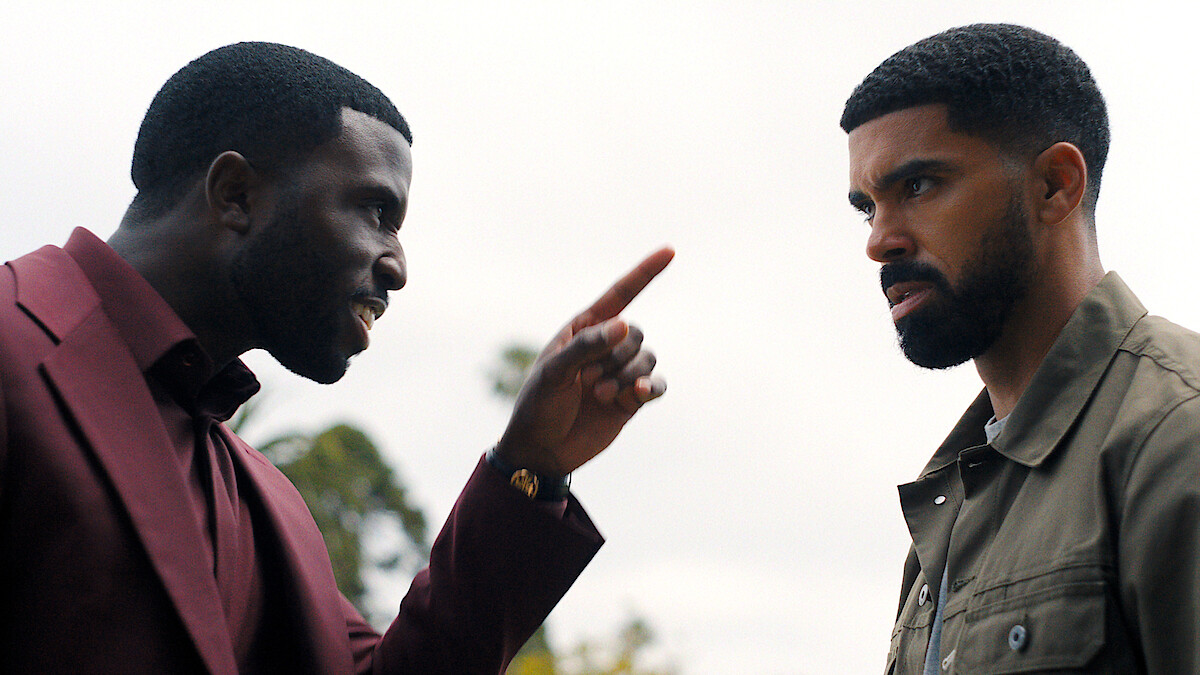
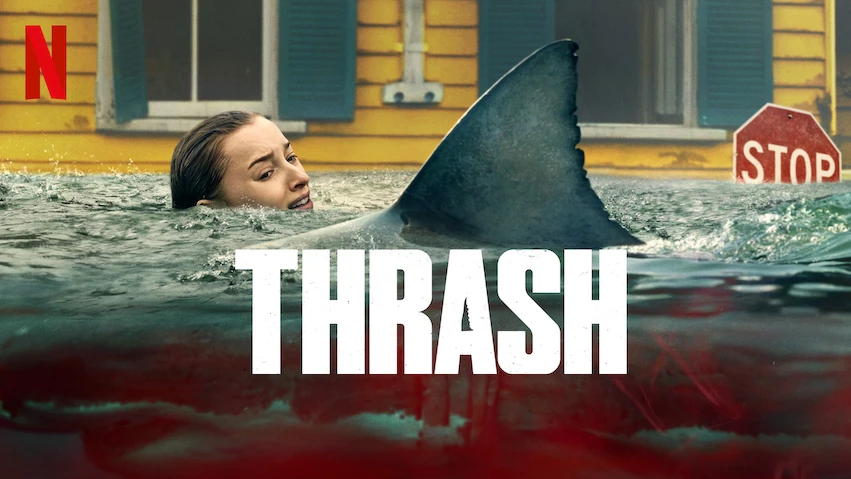
A pregnant woman trapped in a car as floodwaters rise around her. An agoraphobic young woman watching from her window as her town vanishes beneath the waves. A trio of foster siblings stranded on countertops as bull sharks swim through their flooded home.
These images are from the nightmare of Thrash, writer-director Tommy Wirkola’s new film, now streaming on Netflix. For Phoebe Dynevor, who plays the pregnant Lisa, Thrash had a simple pitch. “On set, we joked that it’s the longest day ever for Lisa,” Dynevor told Netflix. “She’s already had the whole day at work. She’s four days over her delivery date. She’s heavy and wants to get the baby out. And then the storm starts.” The sharks are close behind.
Produced by Don’t Look Up and The Big Short director Adam McKay, Thrash isn’t just a shark movie; it’s also a disaster film about our changing climate. “Tommy had this idea,” producer Kevin Messick tells Tudum. “He knew that McKay loves shark movies, and at some point, we were going to make one. And even then, several years ago, he was like, ‘What if we combine some of these things that are happening with the weather, with storms, with a shark movie?’ ”
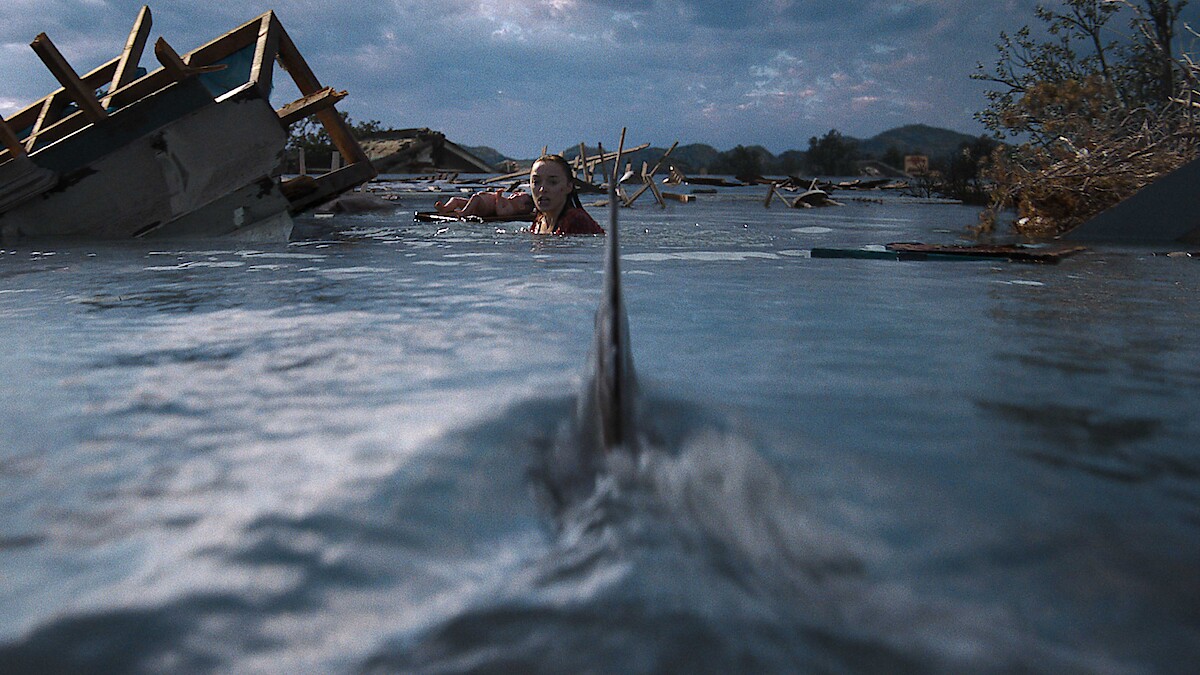
So Thrash centers on a coastal South Carolina town that’s hit by massive category five Hurricane Henry, and flooded to the point of not just water destruction, but shark attacks. How realistic is that? Closer than you might think. Read on to learn more about the science behind Thrash — and how its characters survive the hunt.
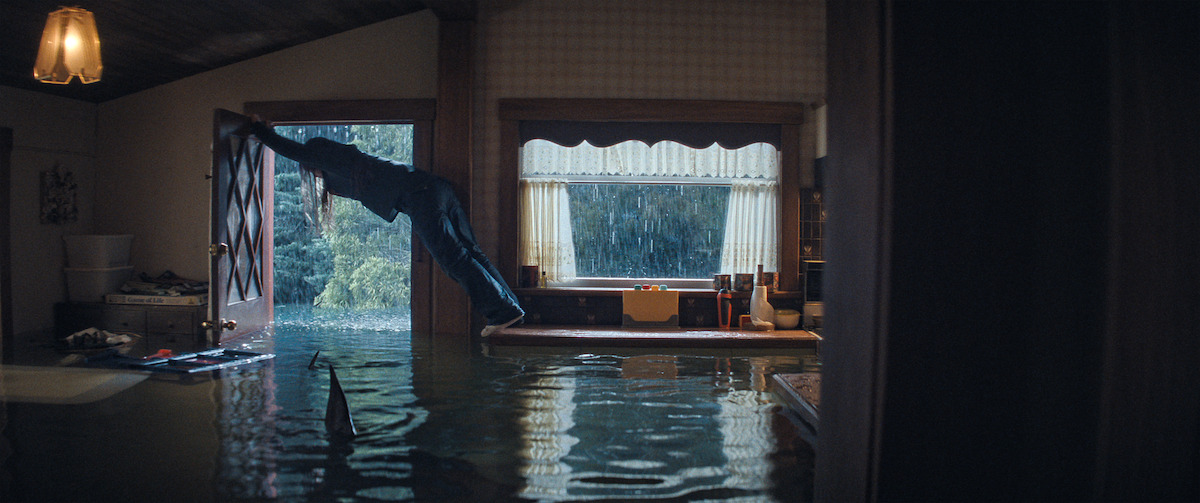
The short answer? Yes, absolutely. When Wirkola first pitched Thrash to McKay and his HyperObject Industries production company, the concept seemed far-fetched. “What seemed like a heightened premise when Tommy pitched it to us has now become much more of a reality,” McKay tells Tudum. “You saw down in Australia, they had torrential, historic, climate-fueled floods, and the floods kicked a bunch of dirty water into the ocean. Bull sharks love dirty water to hunt. So they had four shark attacks in a 48-hour period because of the turgid water.”
For its central location, Thrash chose Annieville, a fictional town in South Carolina. “It’s the right combination for a strong hurricane making landfall, and also having a lot of sharks and a lot of estuaries that feed inland,” National Weather Service meteorologist Joe Merchant, who consulted on the film, tells Tudum.
Of course, Thrash adds a bit of a sweetener for its horde of fishy predators. “Our twist is that there’s a meatpacking plant in town, with a truck driver and a truck full of blood that’s forced to work on a storm day,” Messick says. In other words, a recipe for disaster.
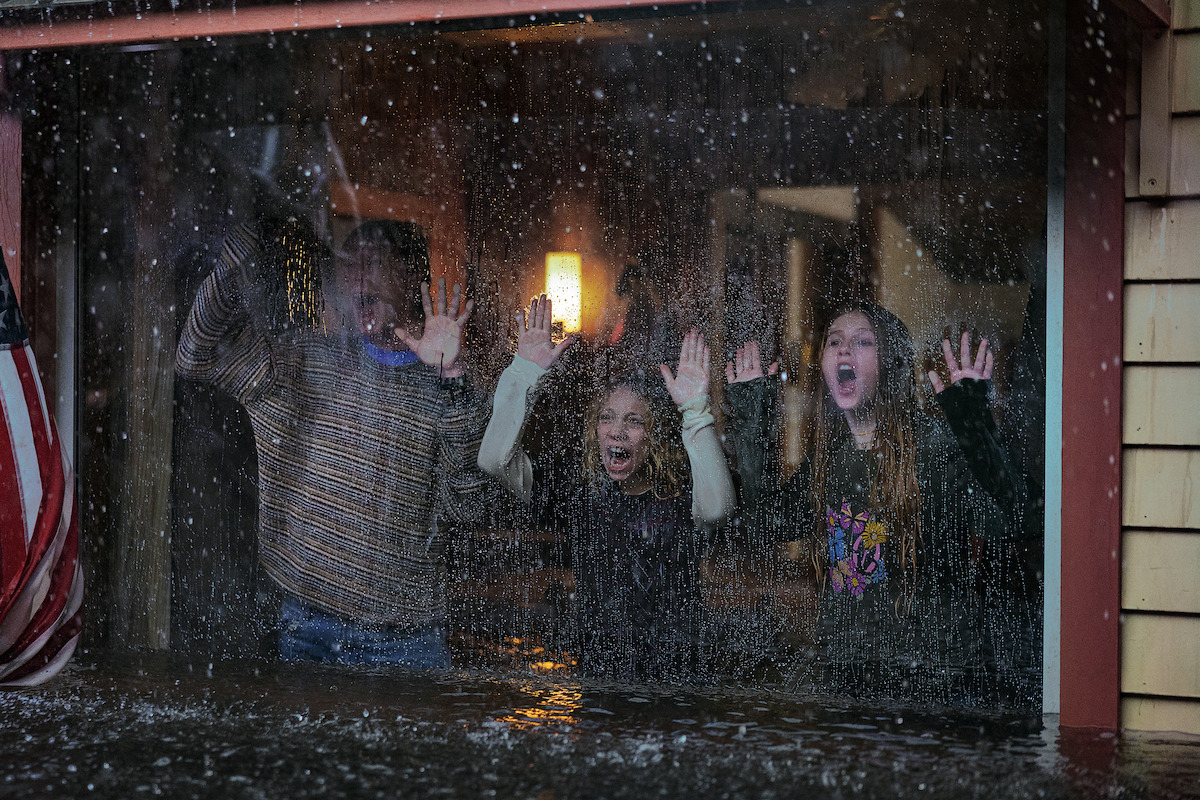
When the levees around Annieville break, the town floods within minutes. “A lot of our infrastructure is built with the idea that the climate is static,” climate scientist Chris Gloninger, another consultant on the film, tells Tudum. “When our first infrastructure was installed in some of our oldest cities, it was designed to withstand a steady, stable climate, and that just simply isn't the case. It’s a moving target now. So not only is it old and aging, you’re dealing with storms that can no longer fall in that threshold.”
In the film, Hurricane Henry is a storm so massive that it would be considered Category 6 — if the scale went that high. “The argument has been made that there should be a Category 6 added to that scale because the Category 5 storm is open-ended, and the wind damage relationship … goes up exponentially,” Gloninger says.
To film the flood, the production developed a crafty solution: rather than flooding the set to higher levels, production designer David Ingram suggested a system of interlocking sets. “As the story progresses and the floodwaters rise, we had a crane come in and remove the first level of the buildings,” Messick says. “And then as the story progresses, we remove the second level of the building, and then by the time you're at the end of the movie, it’s the rooftop.”
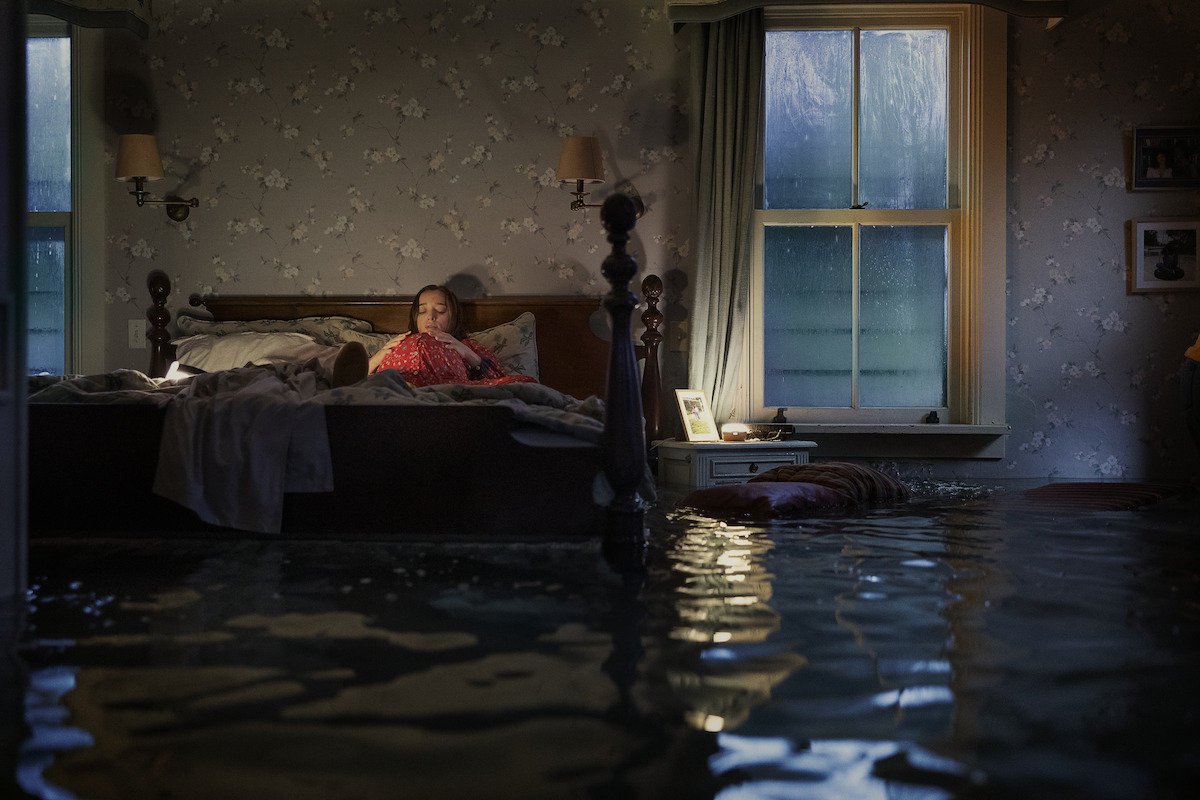
The same ingenuity was applied to the scene where Lisa, trapped in Dakota’s (Whitney Peak) bedroom, goes into labor as her bed floats closer to the ceiling. “We built that bedroom set on an interior stage, and then we lowered it into the water,” Messick says. “So the action of the bed and all the furniture floating to the ceiling is all happening for real, but it’s because we’ve built this set that had these big chains and pulleys, and it’s being dropped into an indoor tank.”
Yes. Sharks hunt by sensing the electrical fields emitted by their prey. So when Dakota distracts the sharks swimming around her home with a floating electrical toothbrush, it’s a perfectly effective plan.
Likewise, when the Olsen foster siblings splash around a jury-rigged bomb made up of T-bone steaks and dynamite, sharks are bound to close in. The opposite is true when Dakota’s uncle Dale (Djimon Hounsou) uses a taser to clear the area of bull sharks. “They can sense an AA battery from a thousand miles away,” Messick tells Tudum. “They’re not afraid of anything other than bigger sharks and electrical currents.”
Unfortunately for them, a bigger shark is on the way.
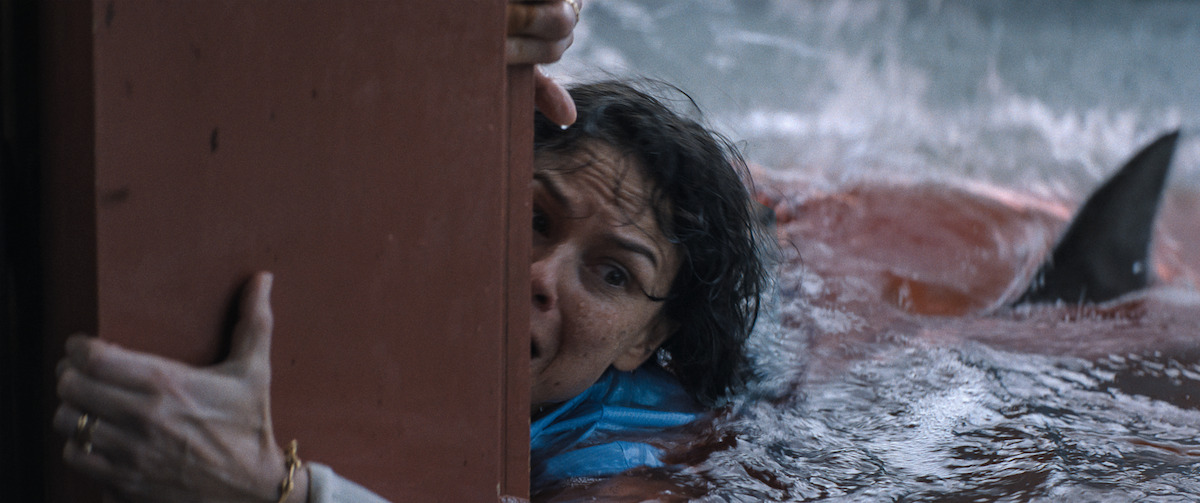
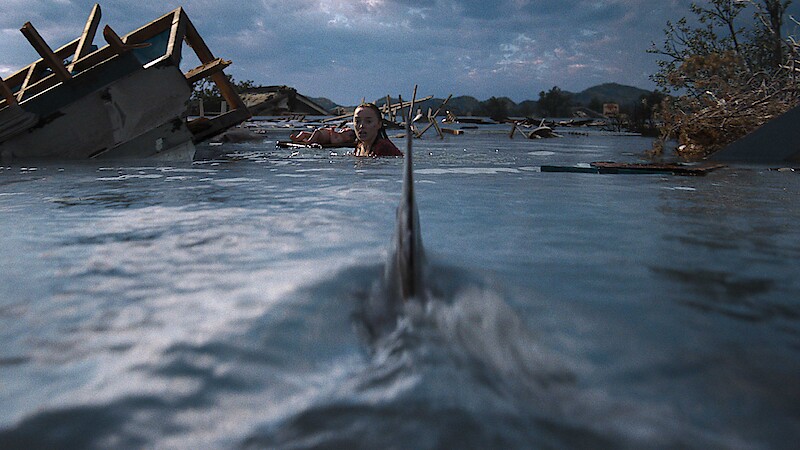
Yes, without question. While most of the threat in Thrash comes from a school of prowling bull sharks (who are known to live in shallow waters), the film makes room for a hero shark of sorts: “Nellie,” the great white that Dale and his companions have been tracking. As Lisa finally gives birth, she becomes the target of the bull sharks (perhaps not quite what her mother had in mind when she suggested a water birth). Lisa fends one shark off with a piece of wood, and Dakota helps from a distance with a speargun, but as the pair reach Dale’s boat, the sharks come in for the kill.
Enter Nellie. The pregnant great white attacks, saving Lisa from the jaws of a bull shark. “Nellie, the great white shark, becomes a bit of a good guy in the movie,” McKay says. “I told Tommy, “I’ve definitely never seen that in a shark movie before.”
“Nellie is our protector,” Peak told Netflix. “If it wasn’t for her, Dakota and Lisa might have been no more. In that moment, towards the end of the film, when Lisa and Dakota are in the water, there’s nothing left. We have no cards left to play, and Nellie saves the day.”
All’s well that ends well — until another storm appears on the radar. “The movie lives in a reality that reflects the world that we’re in right now,” Messick says. “Whether it’s weather, whether it’s rapidly intensifying storms.” Hopefully, our heroes can reach safe harbor before the next storm hits.
Thrash is now streaming on Netflix.