Images: Kirsty Griffin/Netflix
Needle Drop
Behind the Biggest Songs in ‘Sweet Tooth’ Season 2
Including Johnny’s musical moment.
May 1, 2023
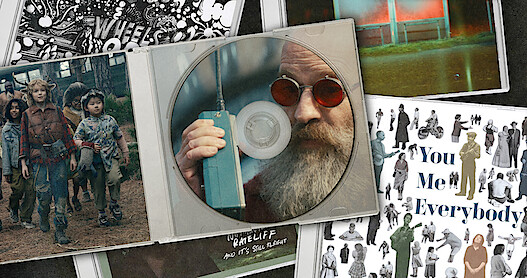
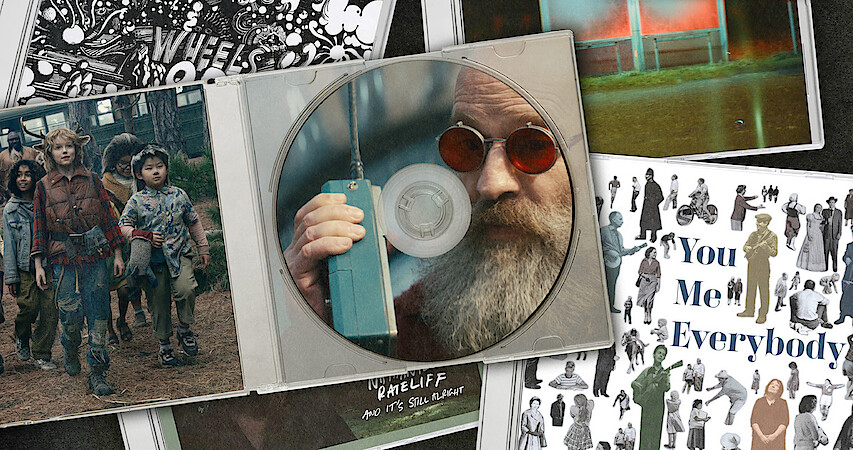
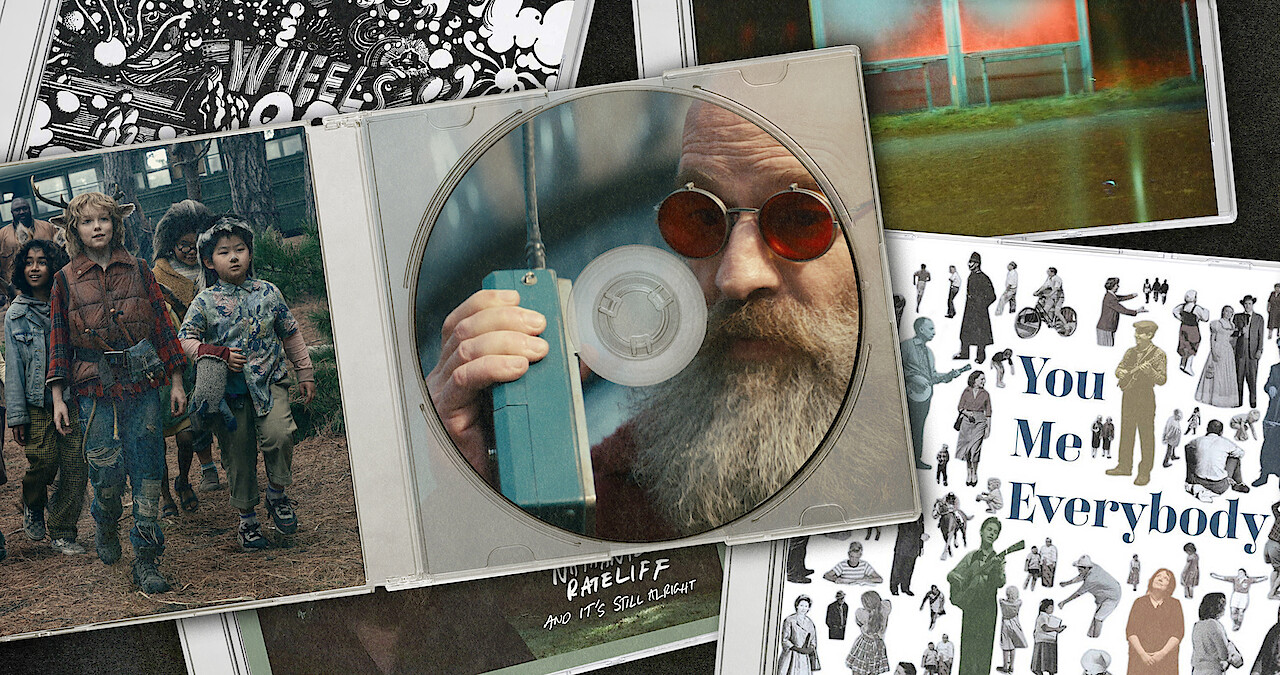
The postapocalyptic world of Sweet Tooth looks just enough like our own that it’s easy to imagine living there in the aftermath of the Sick, the disease that eliminated much of the human population and coincided with the creation of half-human, half-animal hybrid babies. But the Sweet Tooth soundtrack, filled with rock and folk classics, provides another tether to our reality.
“There’s something about this folky, organic feeling. Because of the world ending, we’re clinging to what’s real. A lot of the instrumentation that we use is live, not synth-feeling,” Sweet Tooth music supervisor Season Kent tells Tudum. In a world filled with doom, “there’s a warmness to these organic instruments. Our main character has such a human spirit, and I think this music helps you connect [to him].”
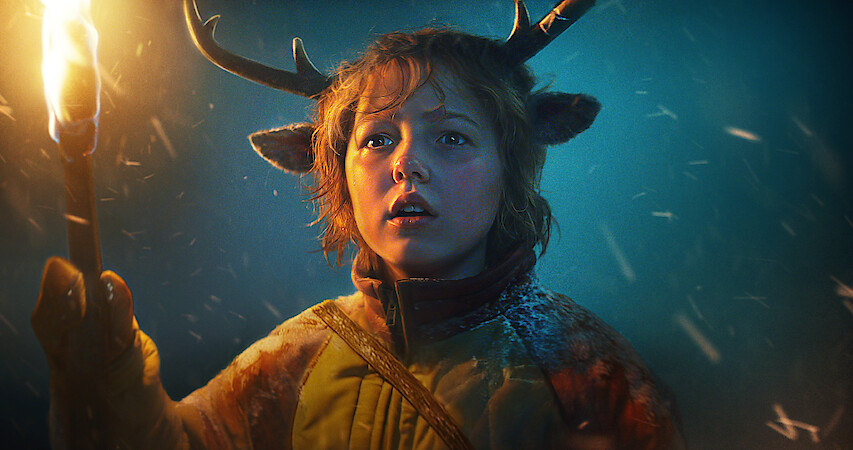
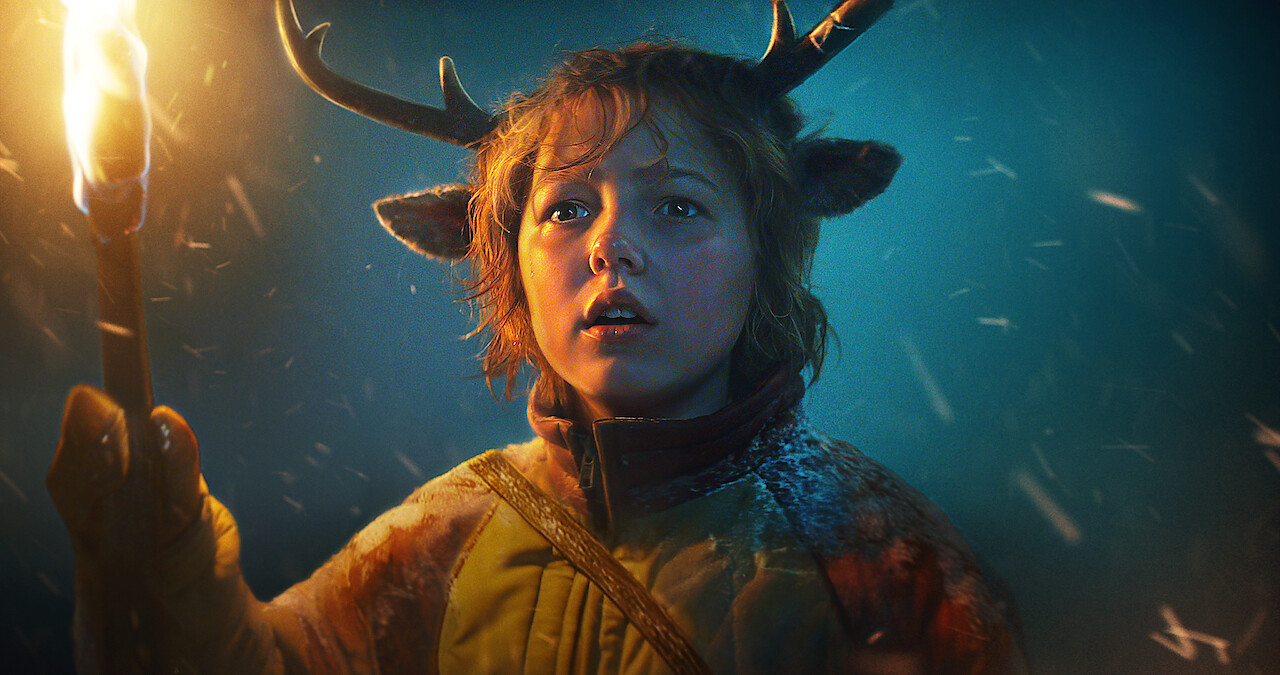
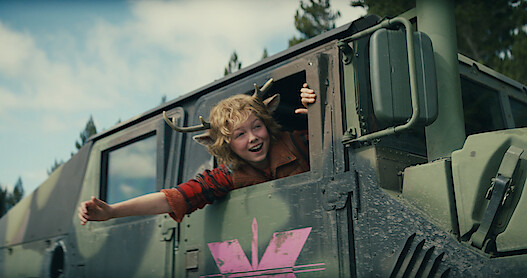
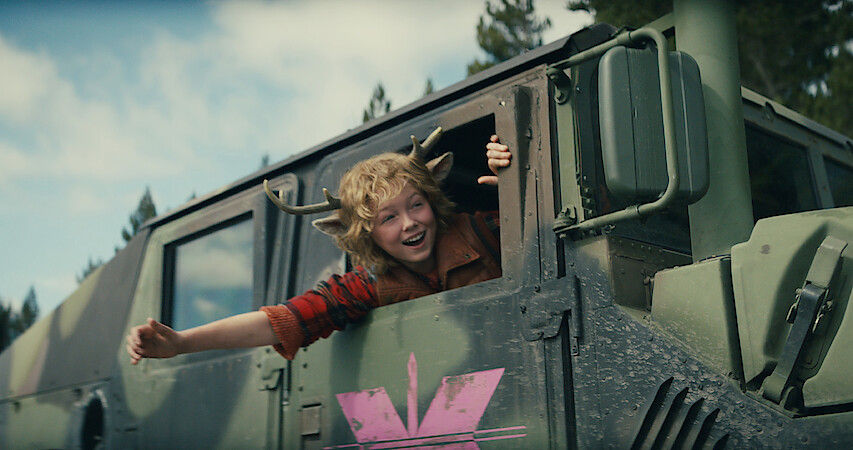
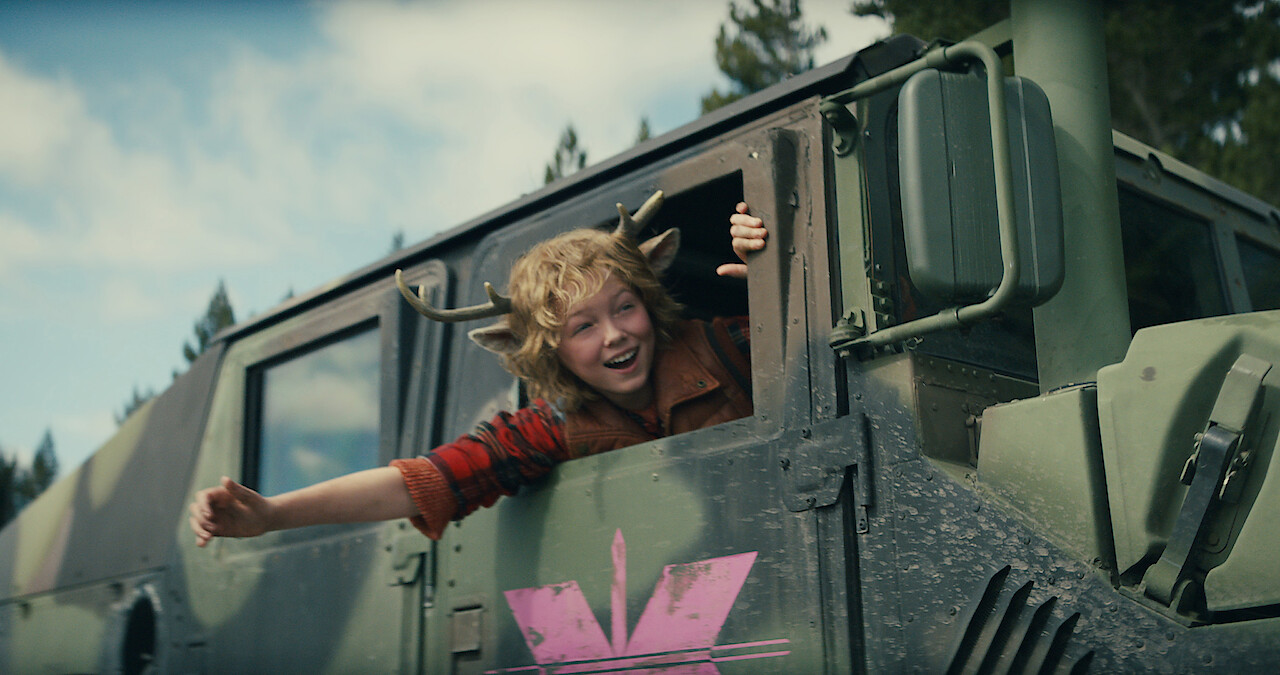
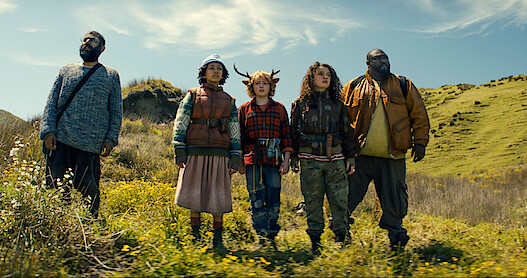
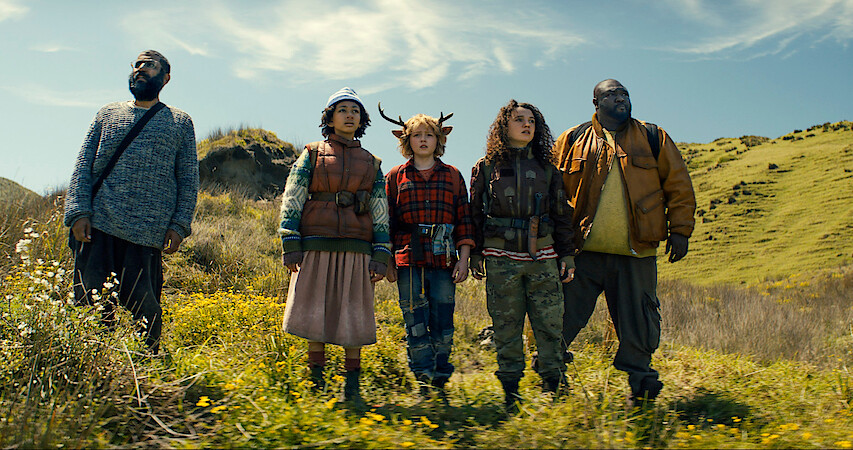
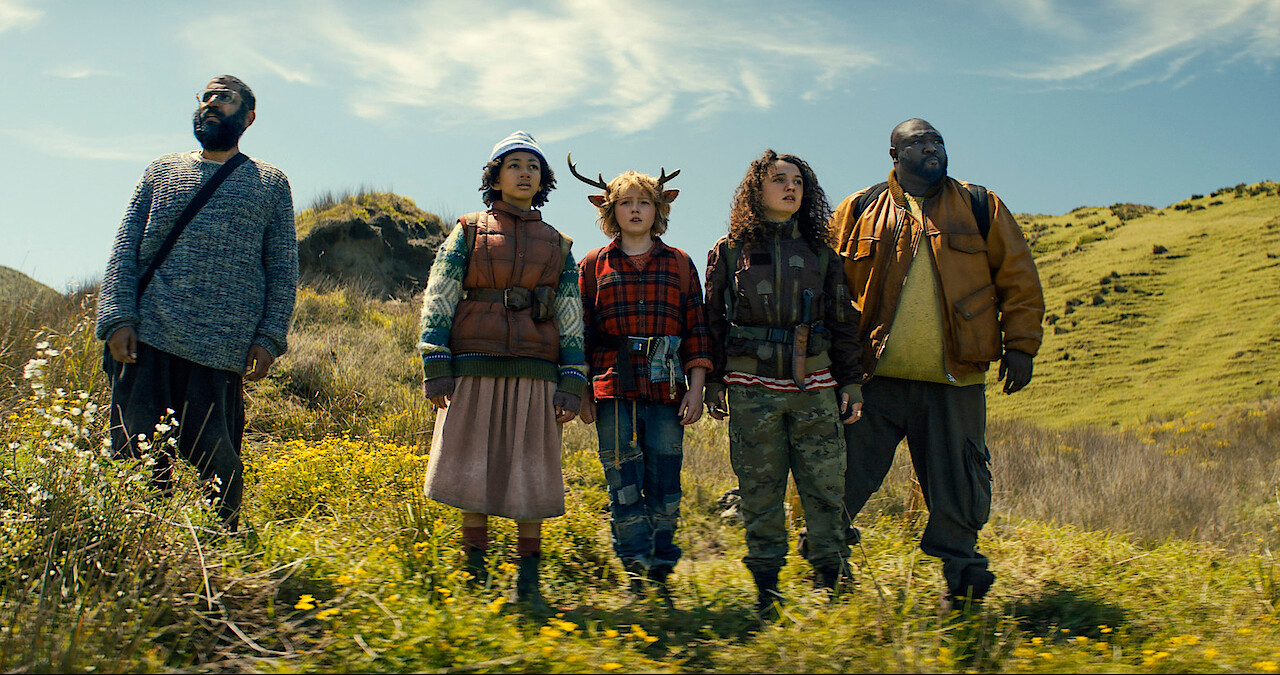
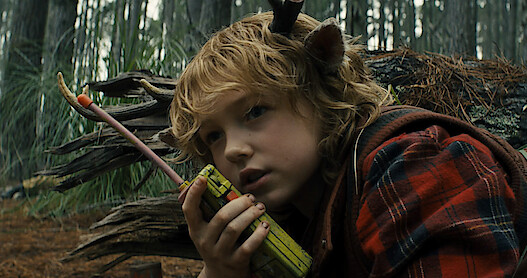
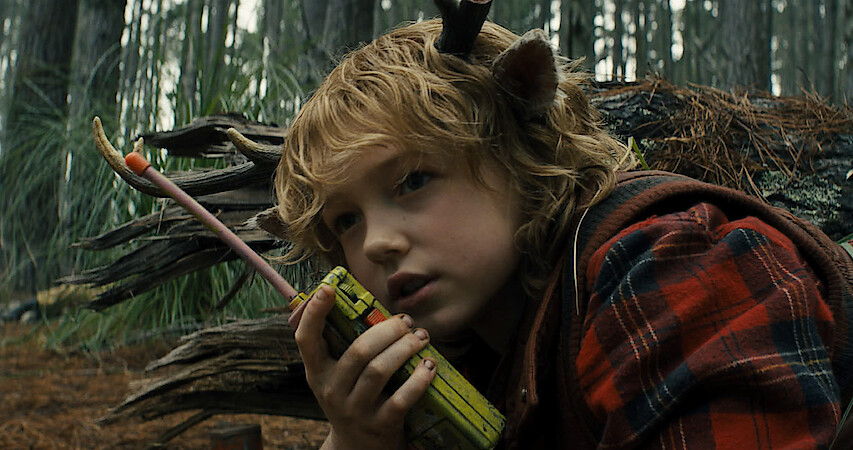
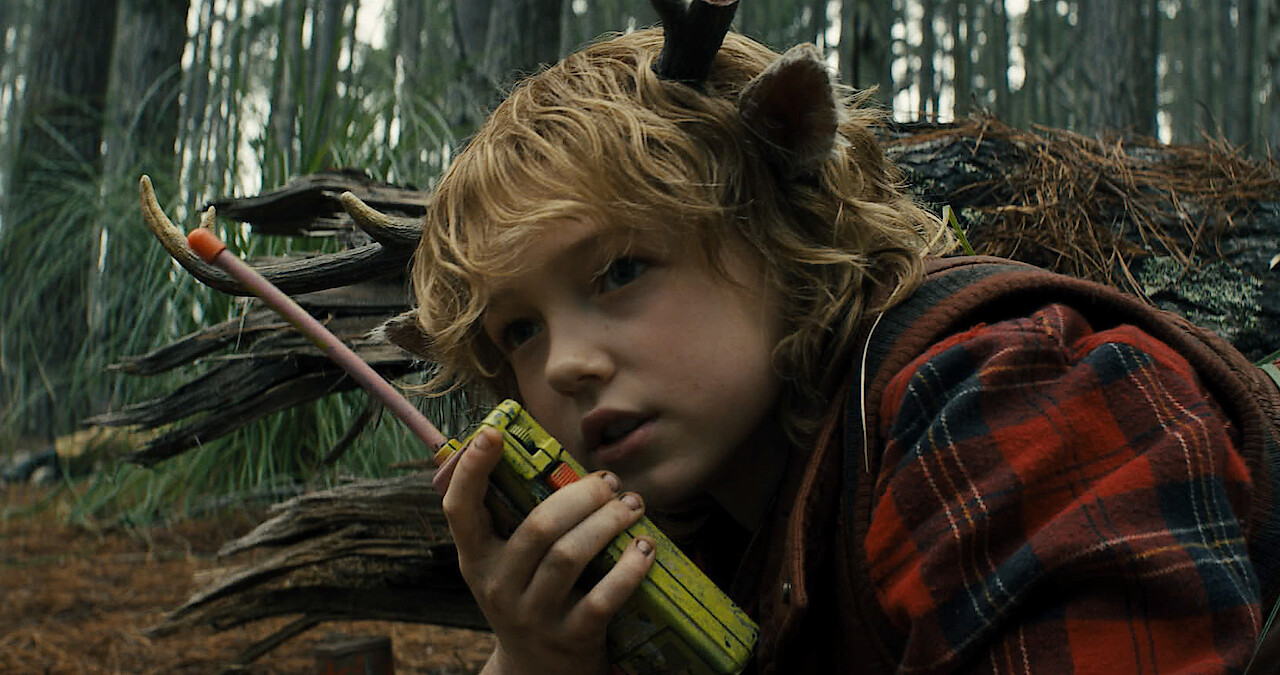
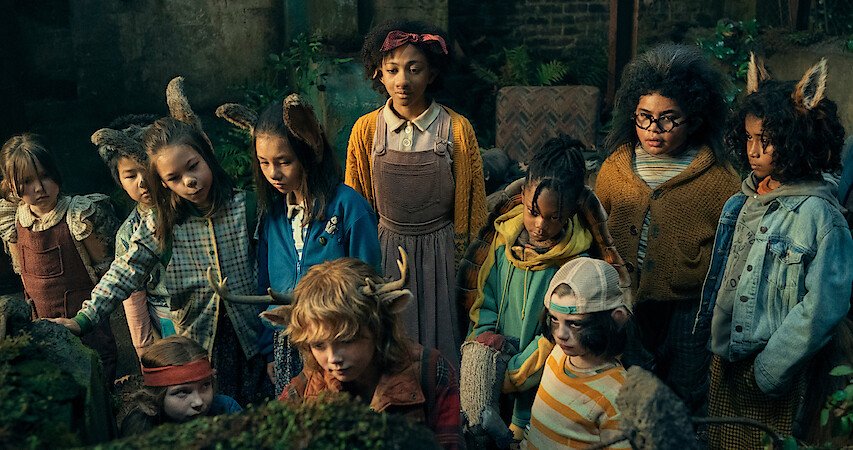
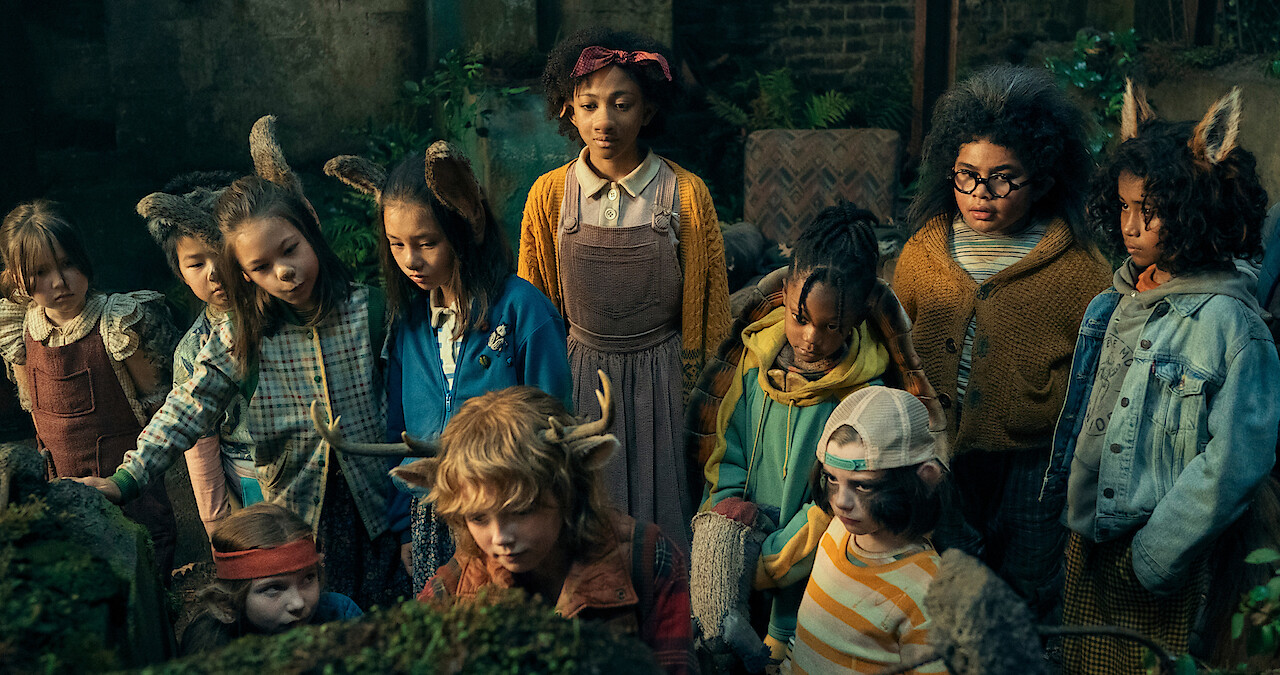
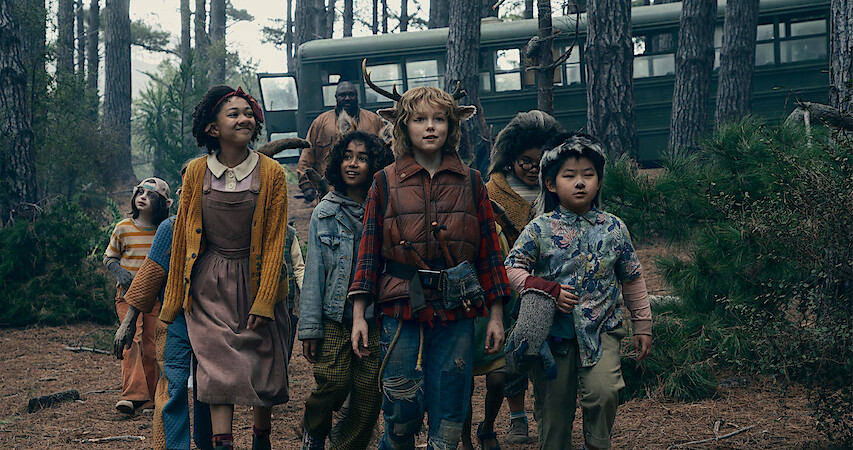
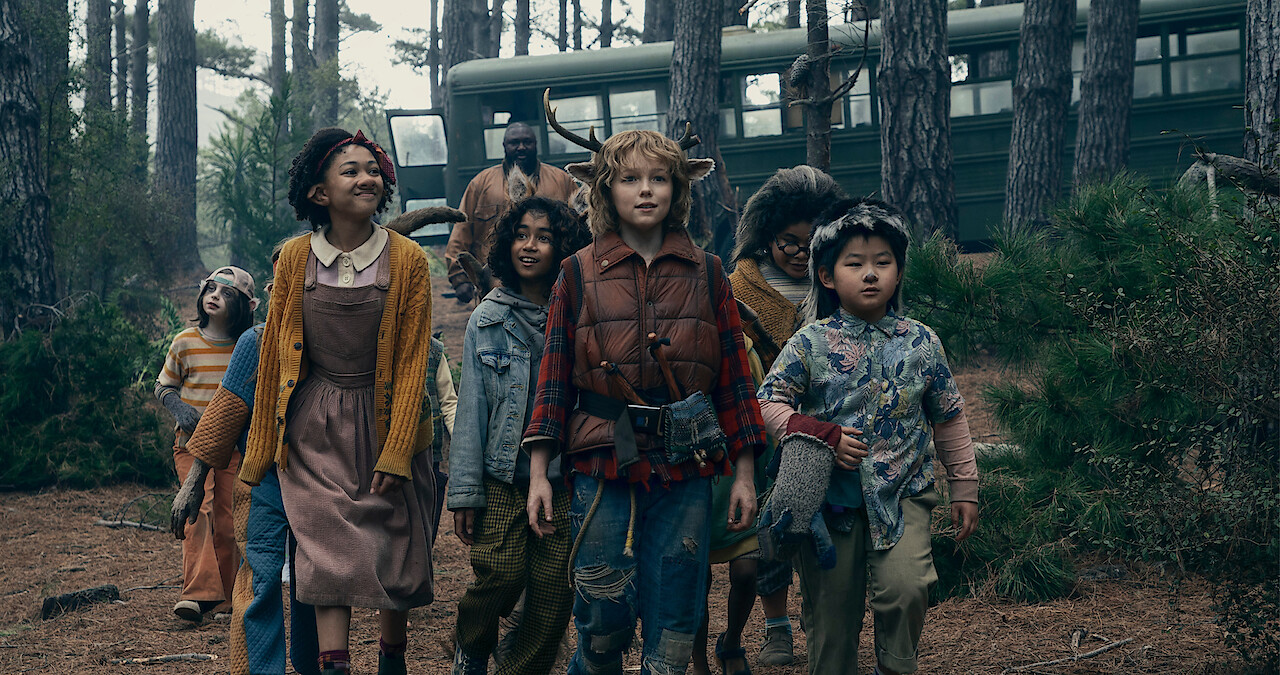
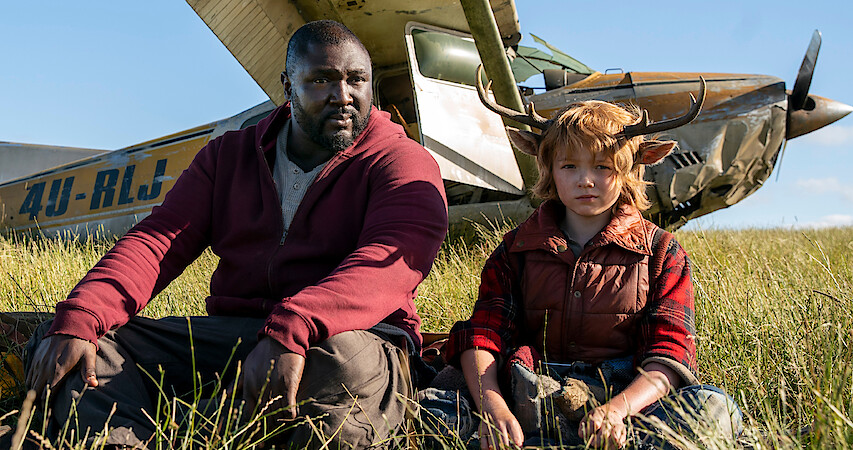
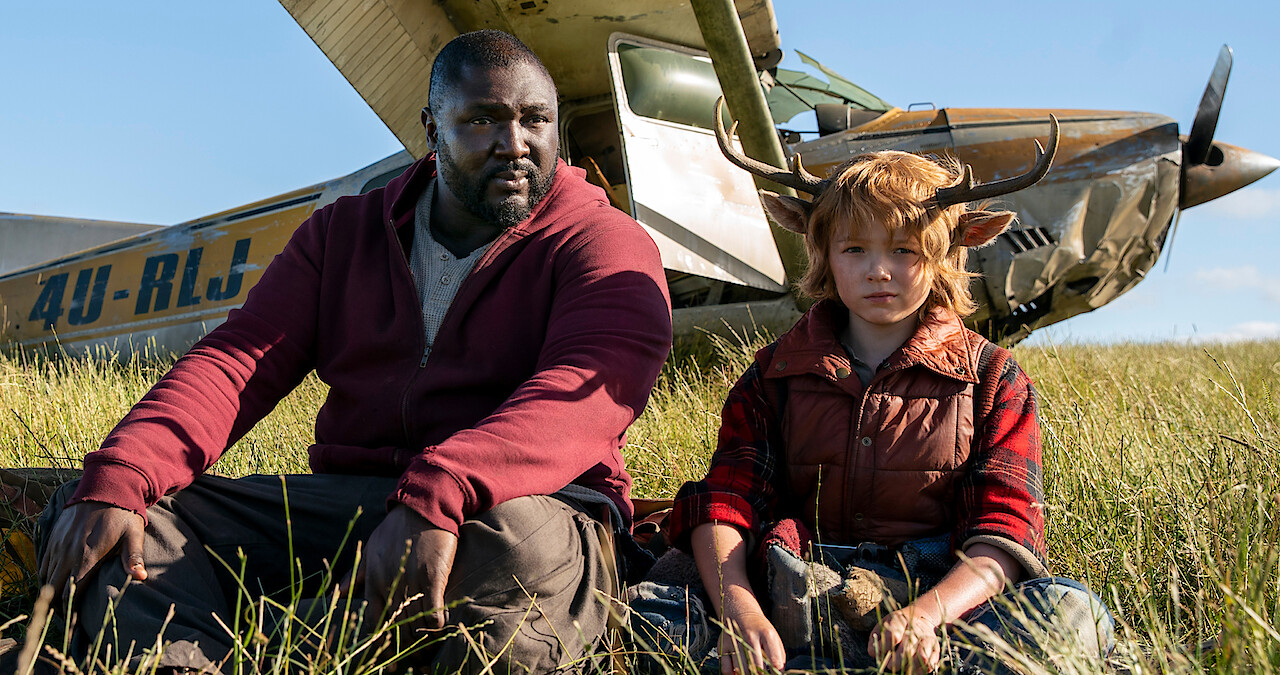
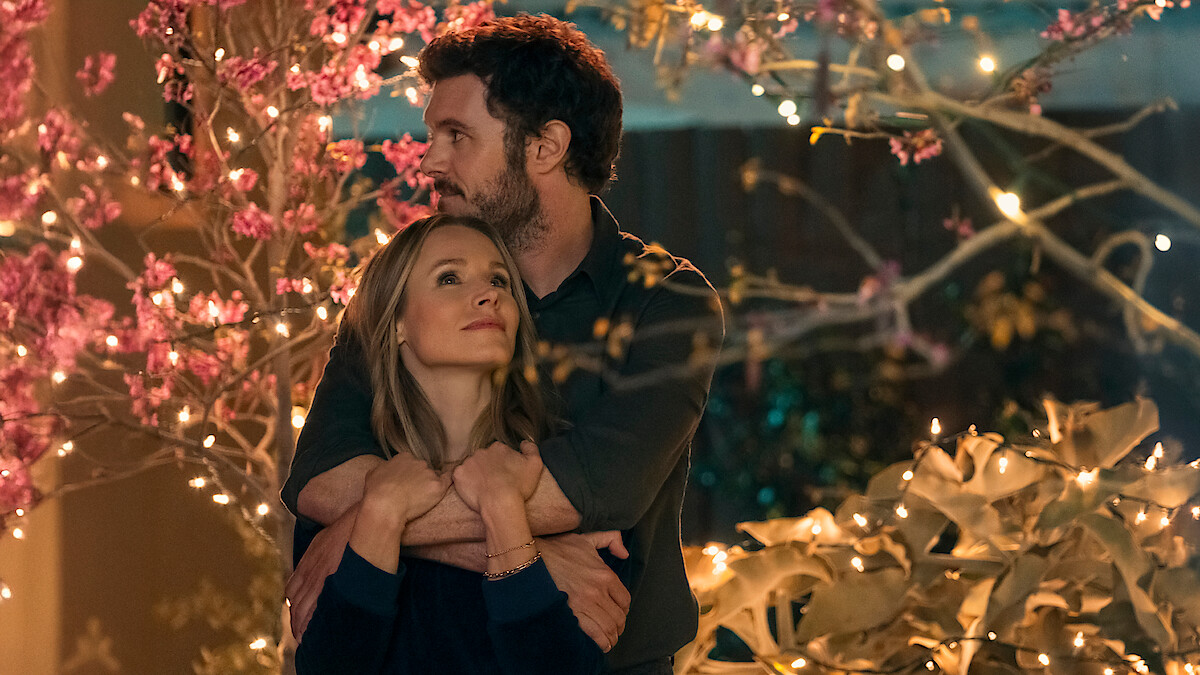
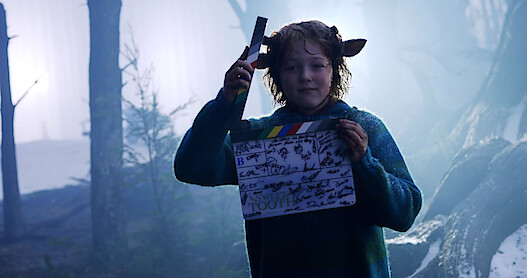
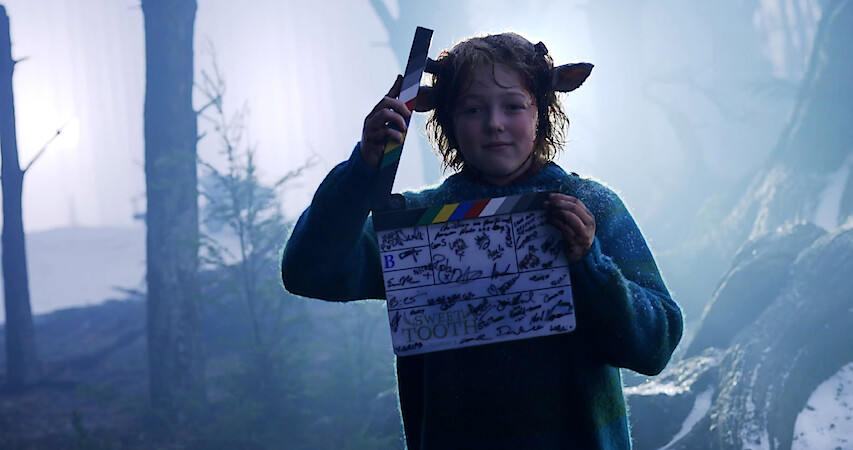
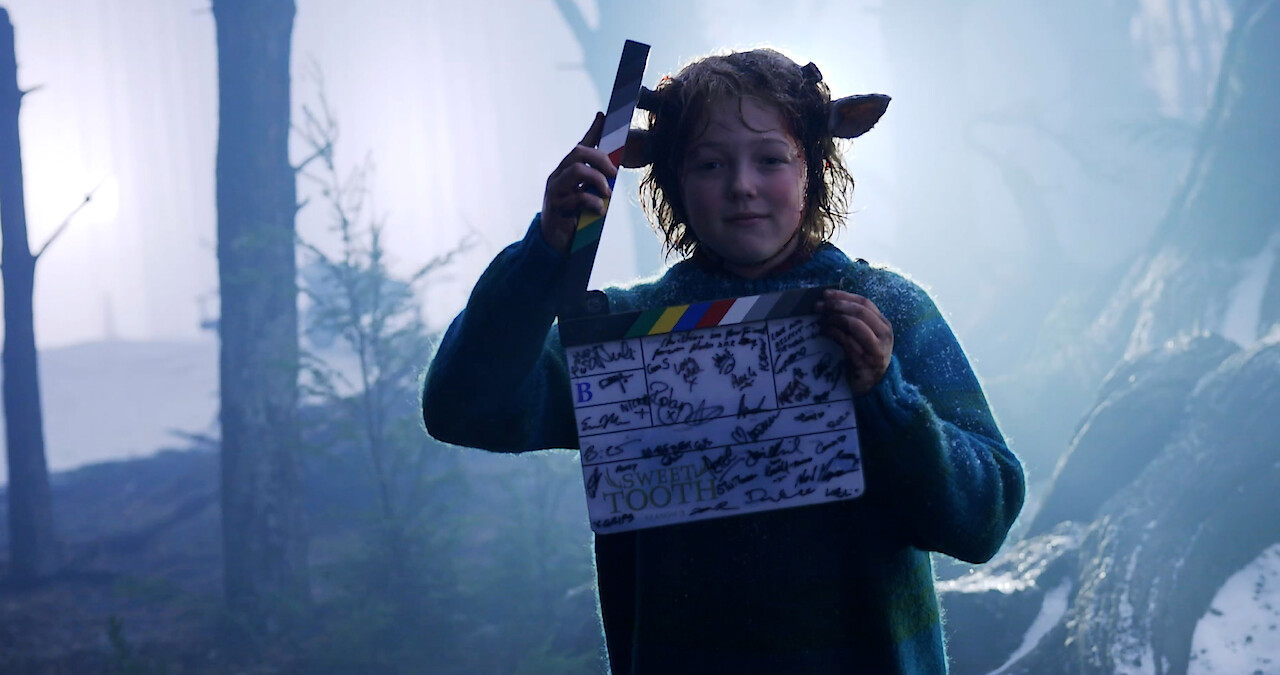
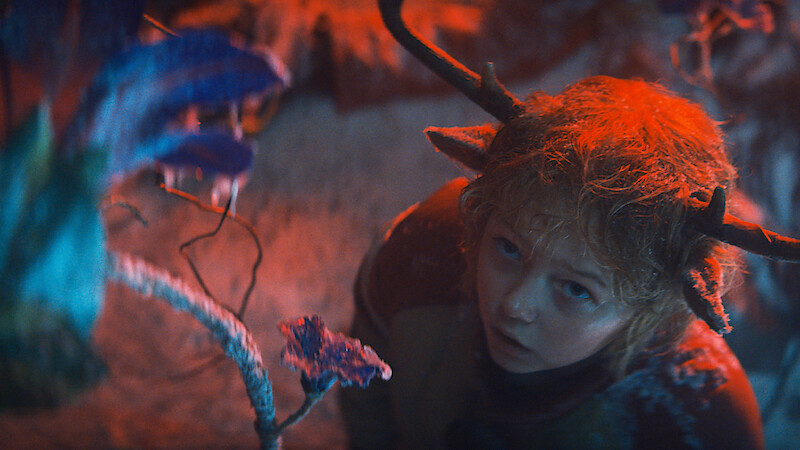
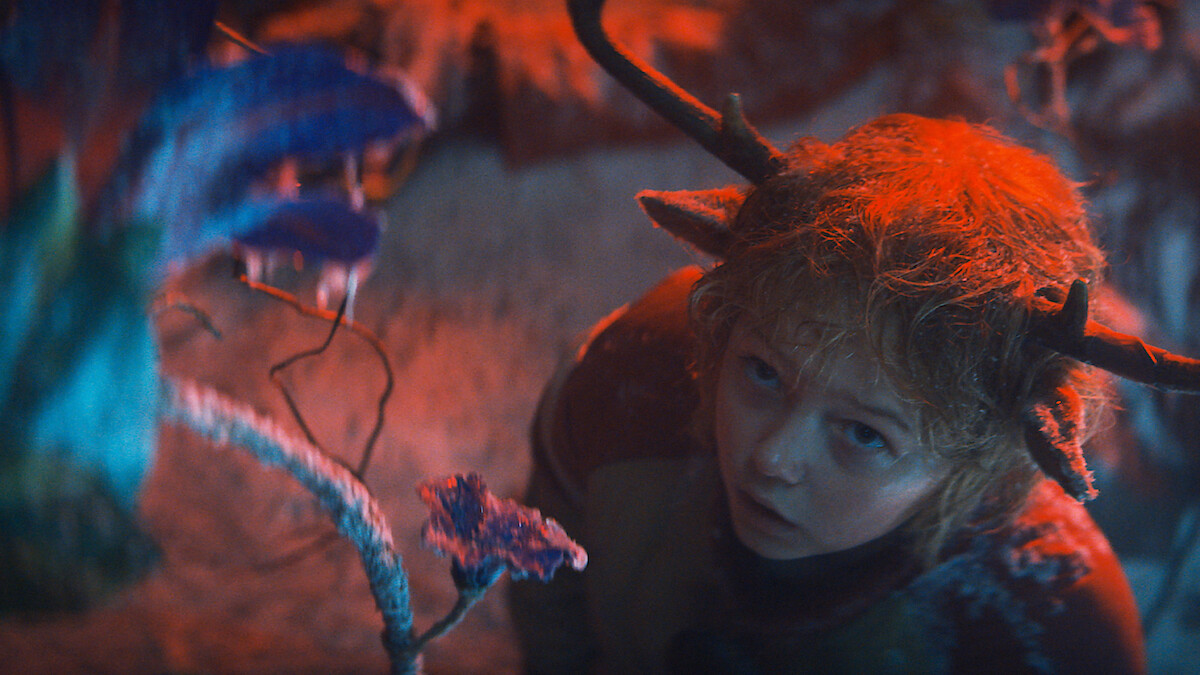
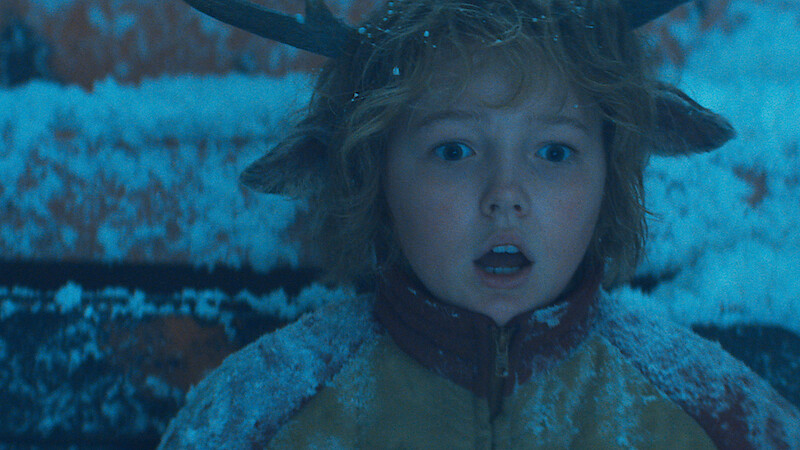
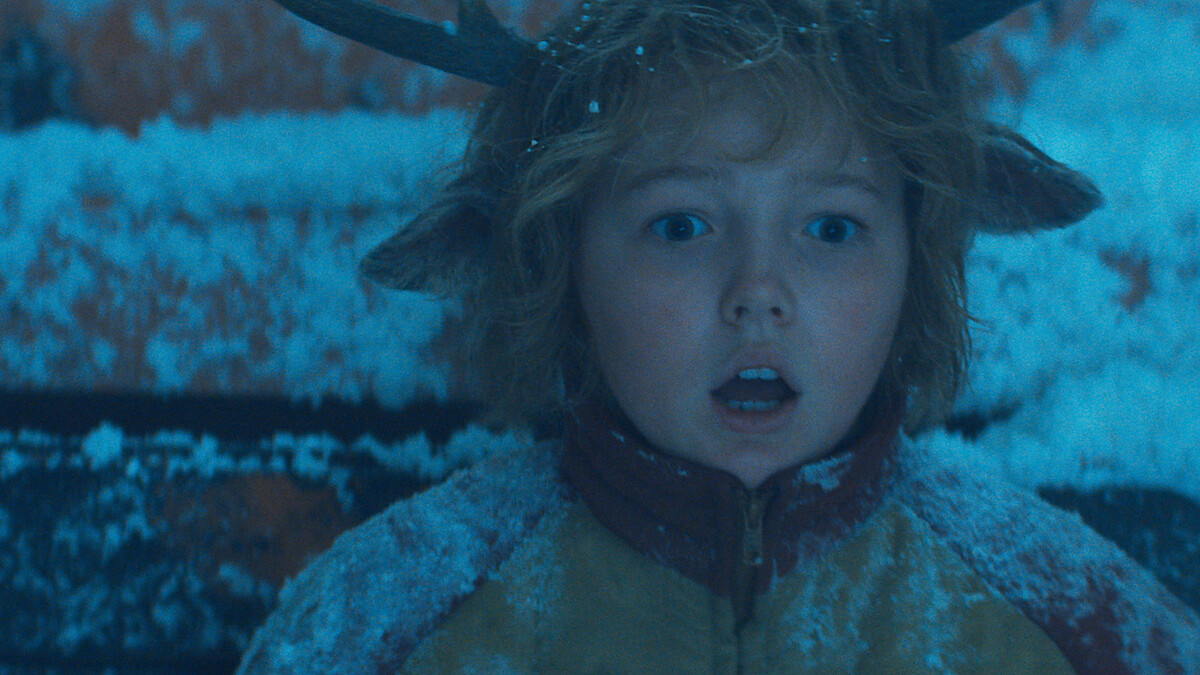
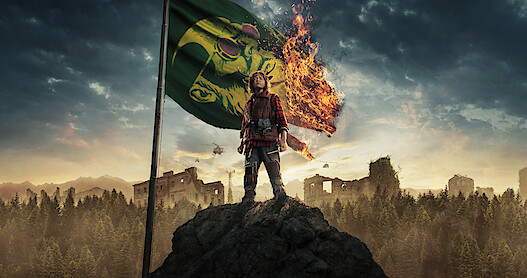
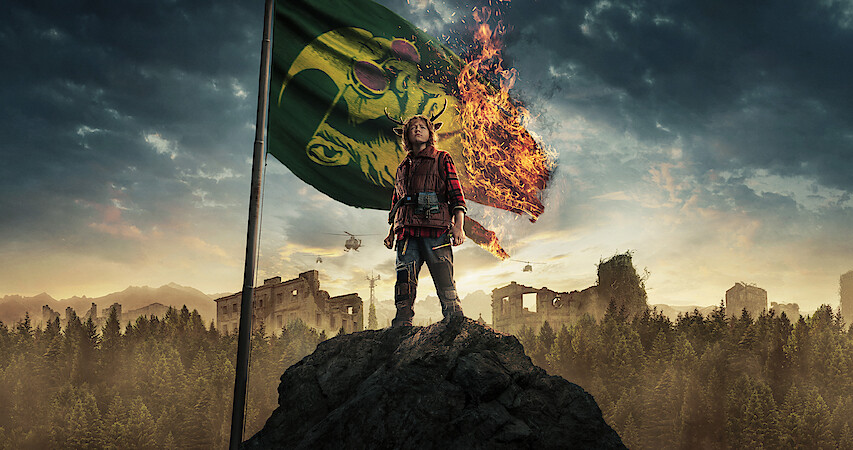
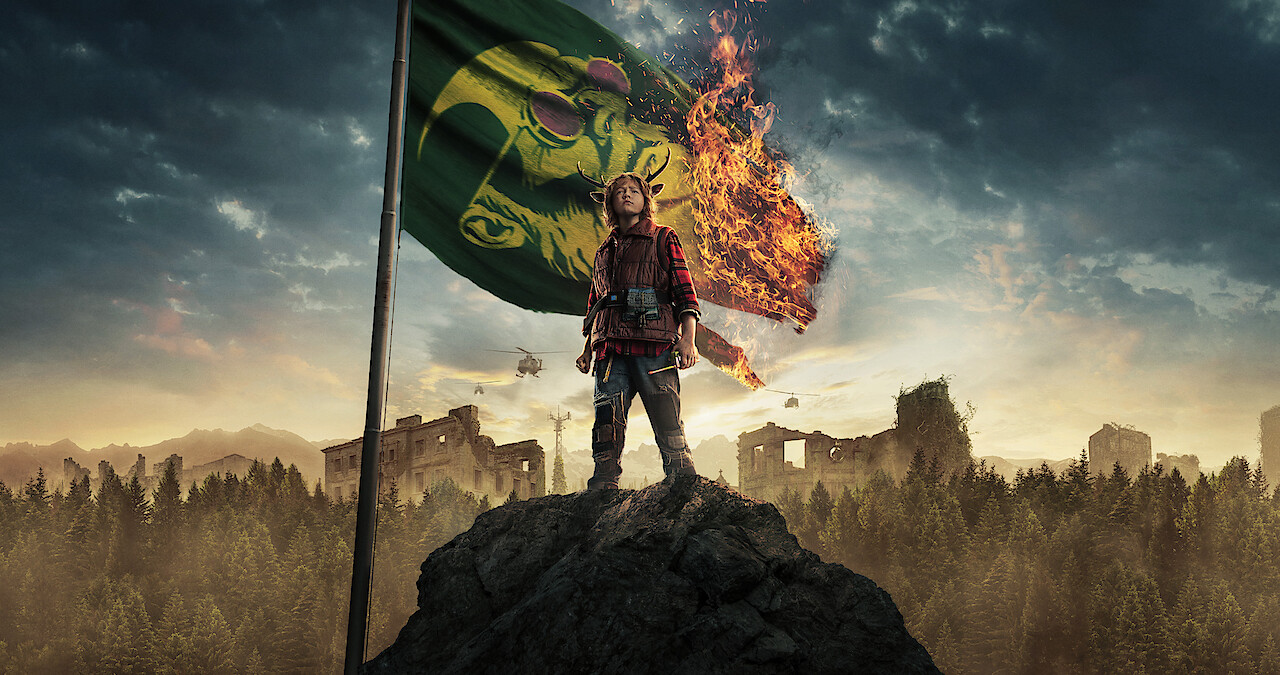
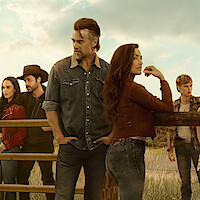
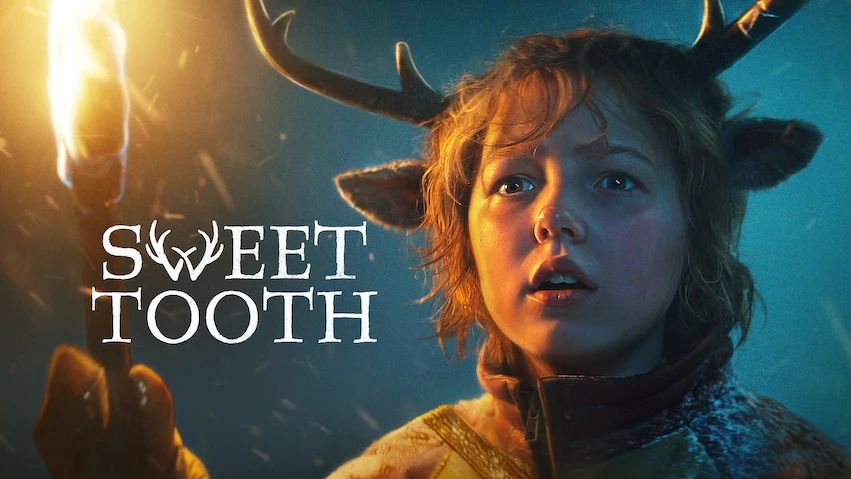
Our hero, Gus (Christian Convery), is a half-human, half-deer boy raised in isolation by his “Pubba” (Will Forte) in the wilderness of Yellowstone National Park. But when his Pubba dies, Gus leaves his hideaway in a quest to learn more about his mother and, in turn, potentially save humanity, meeting new people and visiting plenty of new places on the way. In short, “the show’s about connection,” says Kent.
The music is “such a defining part of the tone and the energy of the show in a lot of ways,” showrunner Jim Mickle tells Tudum. That tone was set with the song that closed out the first episode, “Dirty Paws” by Of Monsters and Men. “That continued all the way through Season 1, and we got to use so many songs, all the Grateful Dead stuff, that I was so excited about,” he says.
Mickle, Kent and composer Jeff Grace collaborated on both seasons of the series, helping to establish the grounded mood that carries through every episode. Read on to learn more about some of the most pivotal moments of the new season, as Kent takes Tudum through some of her favorite songs of Season 2.
🤐 SPOILER ALERT 🤐
Cream “White Room”
Kent says she tried “lots of songs” to open the season before landing on this classic. “We needed a song that was epic, driving with uncertainty, somewhat mysterious but also felt like this is every day at the Zoo” that once served as a sanctuary, but is now a prison for the hybrids.
“White Room” was released at the height of the Vietnam War in 1968, and that driving beat fits perfectly with what the Zoo has become. “It’s now a war zone,” she explains. “That’s the space that we’re in. And there’s a lyric in the song that says, ‘I’ll wait in this place where the sun never shines,’ which I thought was really powerful.”
The Antlers “Kettering”
Patrick Watson “Je te laisserai des mots”
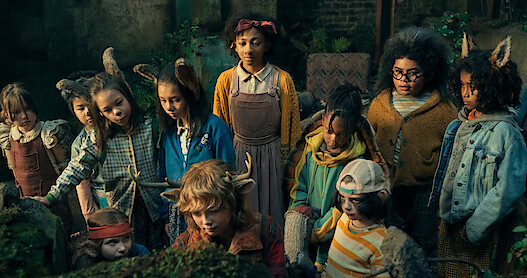
“[Patrick Watson] is a classically trained composer and he writes beautiful, emotionally driven, very cinematic songs,” Kent explains. “His music evokes so much emotion and heartache with a sense of yearning and drive. I always get so swept away and so viscerally in the moment, which I think is what happens in this montage. Gus is showing the other hybrids his home, and Dr. Singh (Adeel Akhtar) is moved by realizing he’s met the key that may unlock the virus: Gus. Every character is having an emotional reflection. It’s a beautiful montage — wonderfully shot, edited and crafted with the music.”
Clarence Murray “Dancing to the Beat”
Mickey Murray “Mama’s Got the Wagon”
Toots and the Maytals “Never Grow Old”
Eagle Eye Williamson “The Sun Has Fallen”
Three Dog Night “Shambala”
Wolf Alice “No Hard Feelings”
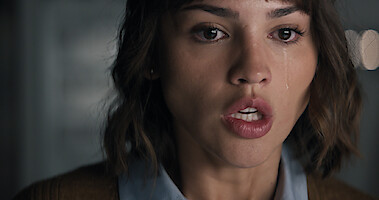
The first of two Wolf Alice songs in Season 2 appears thanks to showrunner Mickle. Says Kent, “I think he really connected with this band for this season, which is why we highlight them twice. It’s a really beautiful moment with Becky [Stefania LaVie Owen], who’s on Gus’ side, but she’s going undercover to join the Last Men, who she despises, to try to save Gus and the other hybrid kids. It’s this moment where she’s reflecting on her own life, and we never really see her be vulnerable.”
You, Me, Everybody “Stranger”
You actually hear “Stranger” twice in this episode, once when the band performs it on-screen as the episode opens, and again at the end. Producers chose this local New Zealand group to perform in the first scene, but bookending the episode with their song came later. “We didn’t plan to use the song a second time, but once we were in post-production, bookending the song made the episode feel very full circle,” Kent says. “It ties the episode all together thematically.”
Scala & Kolacny Brothers “Our Last Fight”
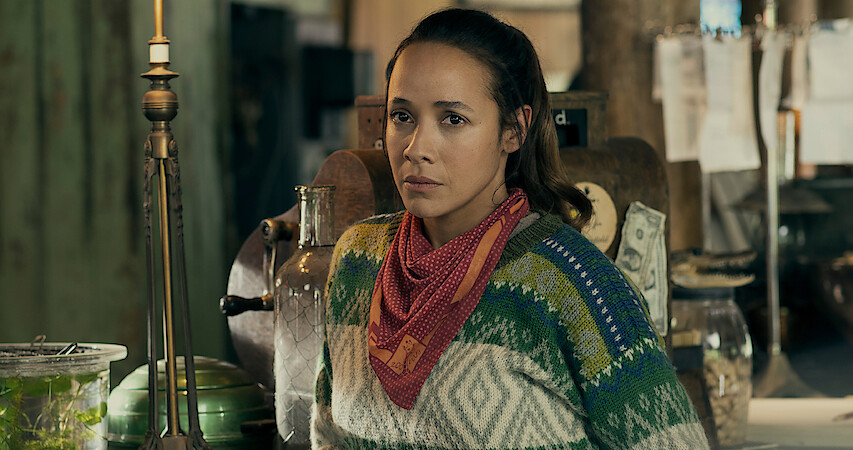
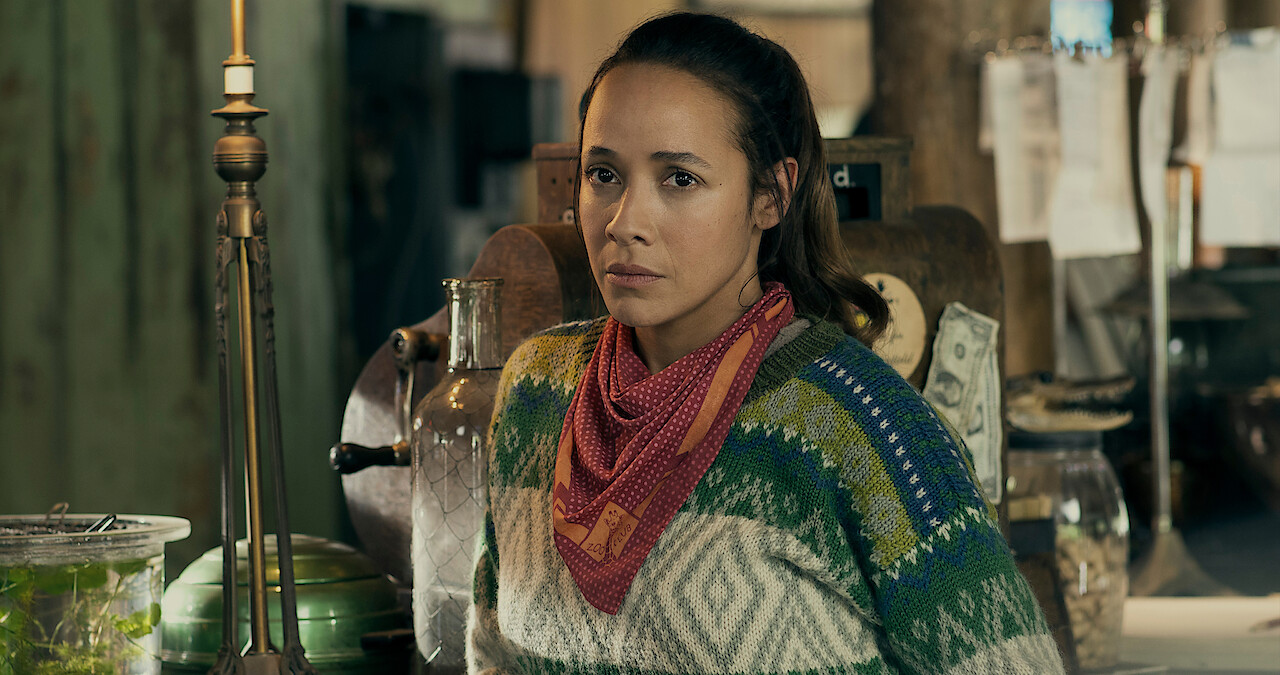
At this point in the season, the hybrid kids don’t know if they’re ever going to get rescued — and their de facto guardians Jepperd (Nonso Anozie) and Aimee (Dania Ramirez) don’t know if they’re going to make it in to save them. “Everyone is pushing forward,” says Kent. “The outlook hasn’t been good but everyone is still trying to make their way through. The choir of voices took the emotion of this sequence to another level.”
Lenny Roybal “Little Daisy”
Aisha Badru “Splintered”
Wolf Alice “The Last Man on Earth”
The second Wolf Alice track comes in a montage that starts out sad (accompanying footage of Dr. Singh’s lab on fire), then becomes triumphant as the kids finally escape the zoo with Aimee and Jepperd. “The song grows and builds and [becomes] anthemic. Then it quietly comes down and we see Aimee’s finger twitch,” says Kent. “F**k.”
Nathaniel Rateliff “And It’s Still Alright”
Amos Lee “Wait Up for Me”
Paul Simon “50 Ways to Leave Your Lover”
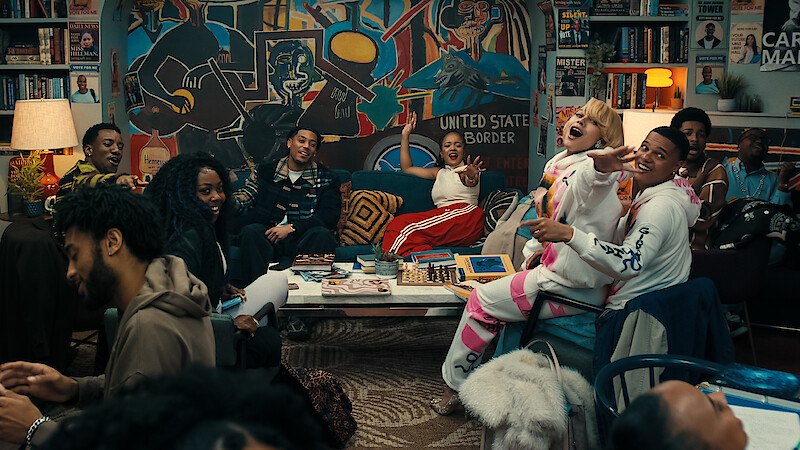
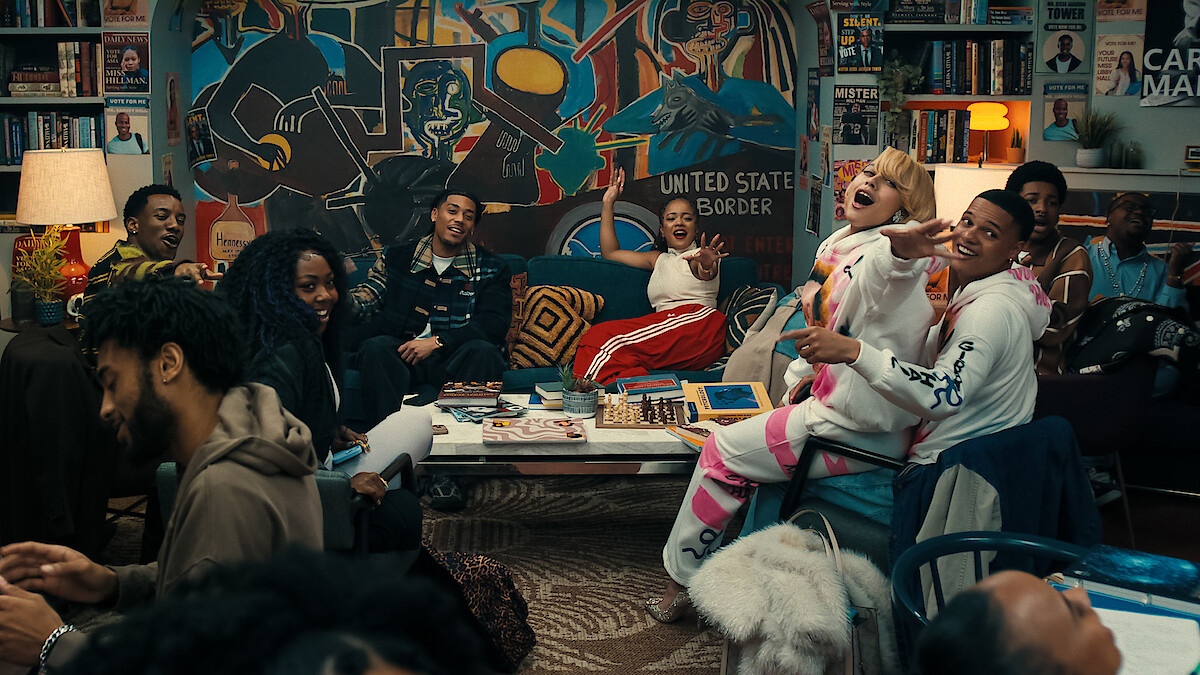
“That one was written in the script,” reveals Kent. “When that happens, you hope it works. You never know, but luckily this one worked so well. It’s a really special, warm moment. It’s so lovely just getting to see the kids working together, especially the hybrid kids who have really never [interacted with others like them].”
The Walkmen “Line by Line”
Marlon Williams (Simon & Garfunkel cover) “The Boxer”
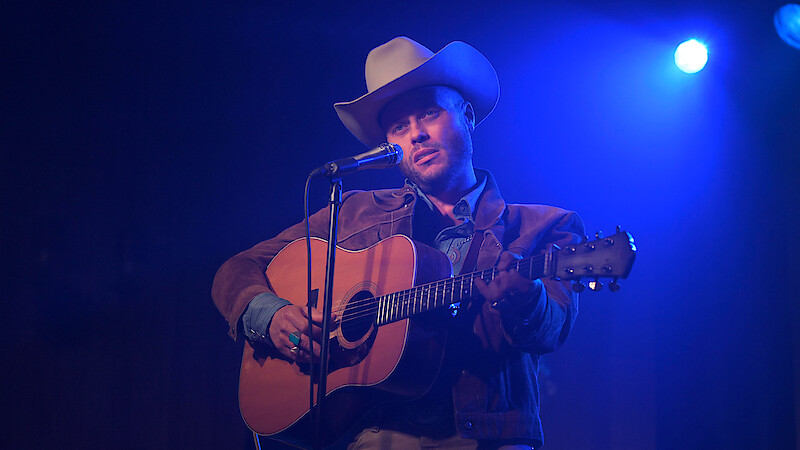
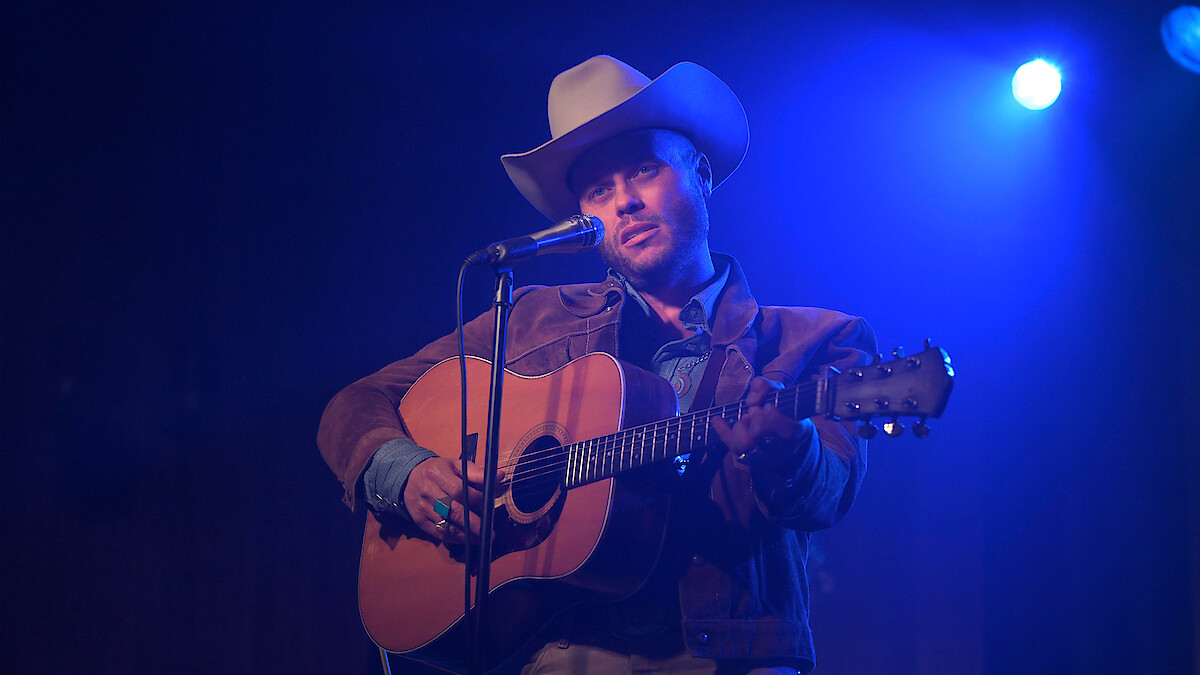
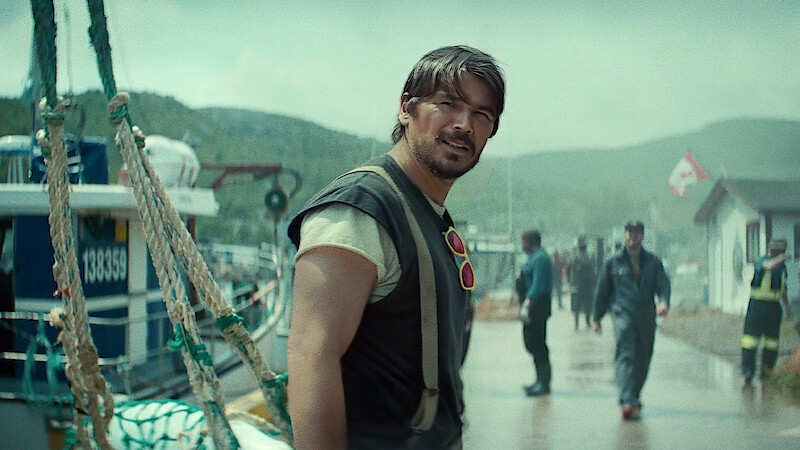
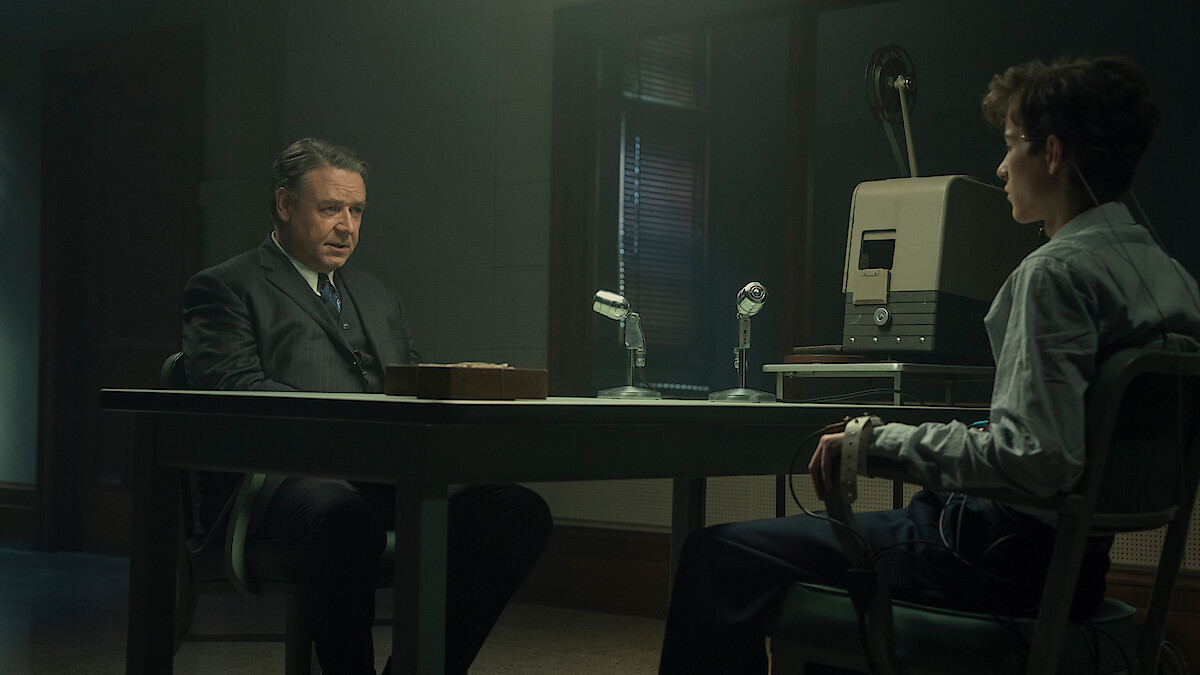
If General Abbot (Neil Sandilands) is menacing and domineering, his younger brother Johnny (Marlon Williams) is empathetic and even calming, particularly in his big finale scene singing an a cappella cover of Simon & Garfunkel’s “The Boxer.”
“Marlon Williams, if people don’t know him, he’s an awesome actor on our show, but he’s an amazing musician, and that’s been his forefront for many years now,” Mickle tells Tudum. “That became a part of [Johnny’s] backstory — part of what linked him with his brother.”
From the time of Williams’ casting, the team had discussed when it would be appropriate to have the character sing on-screen. It might’ve taken until the last possible minute, but once they landed on “The Boxer,” it became a perfect emotional bond between all the characters.
As Kent explains, “It was a song that [Abbot and Johnny] listened to as kids. It’s amazing how music can time travel you back to a moment where you were being vulnerable and true to who you are.”
Additional reporting by Christopher Hudspeth.