I started reading these books when I was five. I probably read them 100 times. There was this meme going around, if you got kidnapped and then you started talking for two hours about something so that someone would finally let you out because they couldn't stand hearing about it anymore. [laughs] That would be Little House on the Prairie, because I really could just talk forever about it. I grew up with the books on my bedside table since I was, like, itsy-bitsy. And I would always get my mom to read them to me. Laura really pulls you in and touches you in a way that not all books do.
[chuckling] I just love the Little House series.
[calm music playing] I like your hat.
[girl] Once upon a time…
[calm music continues]
[pencil scratching on paper]
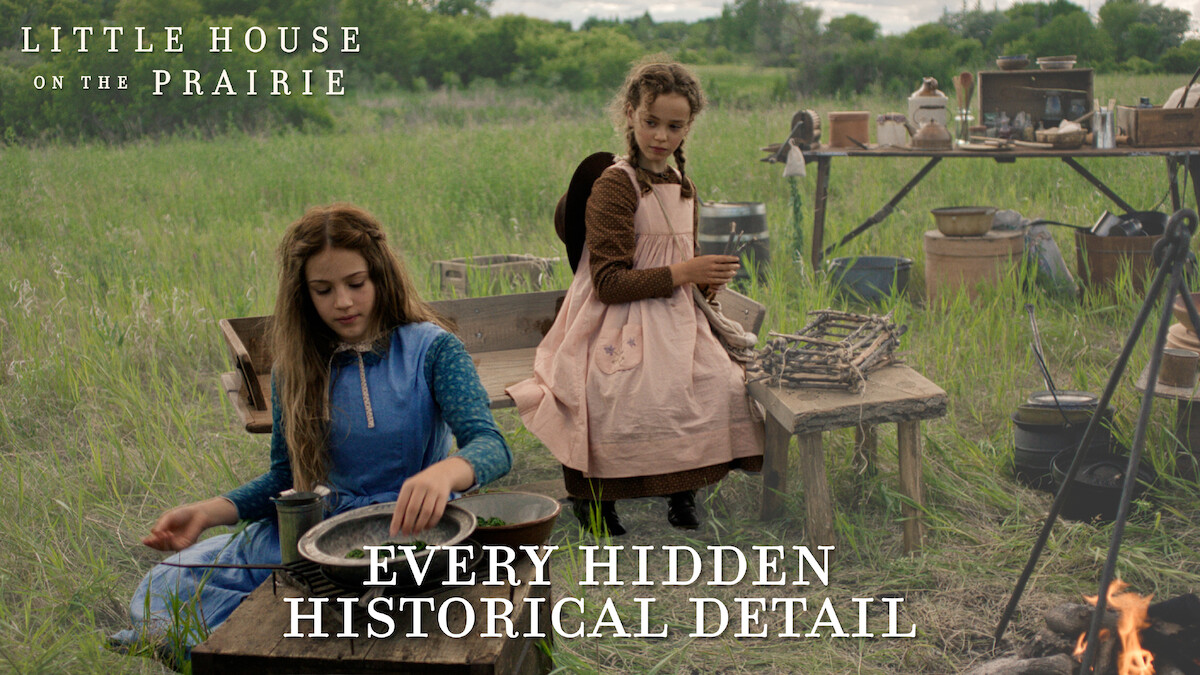
[man 1] We tried to make this almost with that sort of child wonder where she found a feather out in one of her adventures or she found a piece of a chicken bone or something that would fascinate a child. And she's popped it in to decorate her hat.
[girls giggling]
[footsteps approach]
[man 2] In every Western you've ever seen, it's always over the fireplace. But it was important to a lot of people that it be shown that he kept the rifle out of the children's reach. So we decided to place it above the door. Now.
[man 3] A lot of the, like, small things that Laura talks about in the book, writes about in the book or are drawn, we really wanted to bring to the screen for the fans so that they could see them and recognize them and have a moment of recognition. And that was exciting for us as well.
[calm music continues]
[Sonnenshine] The details from the books really sort of stay with people, even 20, 30, 40 years later. They'll say, "Oh, I remember the maple sugar candy or twisting the hay or making the vanity cakes." I passionately care about this project, and I worry every day about messing it up… [laughs] …because I know so many people are invested and so many people have opinions about it.
[calm music continues]
[footsteps approaching]
[Travers] We hand-make the shoes because when the soles flip up, you need to see the nailheads because that's how boots and shoes were made in this period.
[Kent] Cast iron had something called a gate mark, which was like a seam underneath that was left over from the mold. And that pretty much disappeared after 1880. You don't see that anymore. So I made a point of only buying antique cast iron that had that gate mark.
[lively fiddle music plays]
[laughing]
[Hughes] I had a petticoat, and then Baby Carrie has the outfit that's made out of the petticoat, which is crazy.
[upbeat music playing] People didn't have things that were disposable, and materials were incredibly valuable to people. If you spent money on something, you had to know you were gonna use it. Like the textiles getting passed down in the course of our season.
[pencil scratching on paper] So one of the challenges of building the cabin was doing it in the way that the Ingalls family had done it, which was with no nails and with wood pegs and really with all-natural material that they sourced and cut down and made and milled. And we wanted to do that and honor that. So we actually built the cabin that way. There were no nails in our cabin. There was all wood pegs. The door was made from solid wood with wood pegs, no hinges. It was a fun challenge for everyone. I think it shows. It's a very unique project in that you don't just go to a prop house and get a bunch of things for characters.
[metallic hammering]
[pig squealing]
[Kent] We found a lot of great craftsmen to help us out and work on this show. I hired a blacksmith, a local blacksmith, to make hooks and pieces for us that, um, have sharp points that you can actually hammer into the logs. I mean, that's the kind of detail we went into on this show.
[indistinct chattering] Who's that? I saw him riding in. His name is Joseph Paw‑ne‑no‑pa‑she.
[Travers] When you're looking at the Osage traditional dress, you're looking at communication and language. And that's true of many aspects of costume design. Everything that you're looking at tells a story.
[woman 1] For me, this costume was super important and… and vital that I lean on the cultural consultants and make sure that, you know, I'm learning from them and doing my best to wear it in the authentic way.
[calm music playing]
[woman 2] We have some very unique pieces that are all Osage-made. I mean, we've really made a push in costume and in set and in prop to bring some of those Osage artisans in. And there's some very talented people in my tribe. And they're able to showcase their artwork in this show. And I think that is absolutely, truly spectacular. Maybe it doesn't need to belong to any of us. Maybe we just live our lives in peace. What I really hope that families and educators and kids and parents alike take away from this version of Little House is a sense of hope, a sense of community, a sense of connection. So I hope we can inspire that a little bit. Hope is everything. It's the only thing. Don't give up on it. I won't.