Beauty
An Oral History of the Navarro Hair Pouf
Everything’s bigger in Texas — hair included.
Jan. 13, 2022
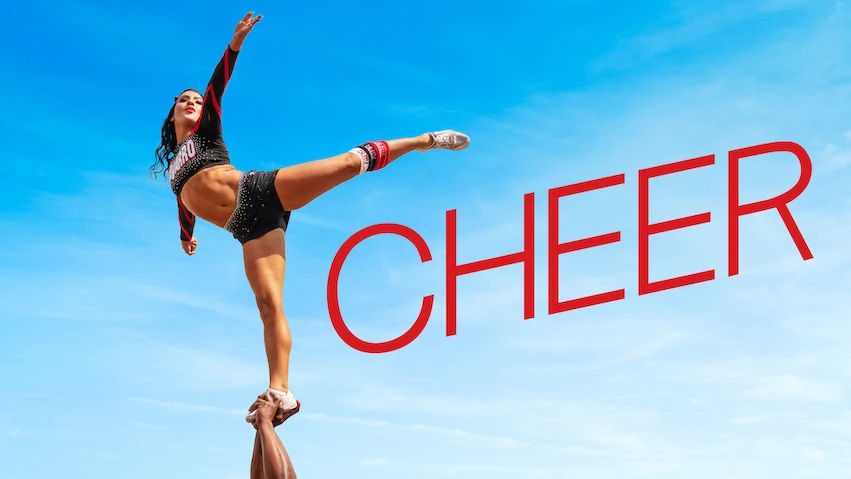
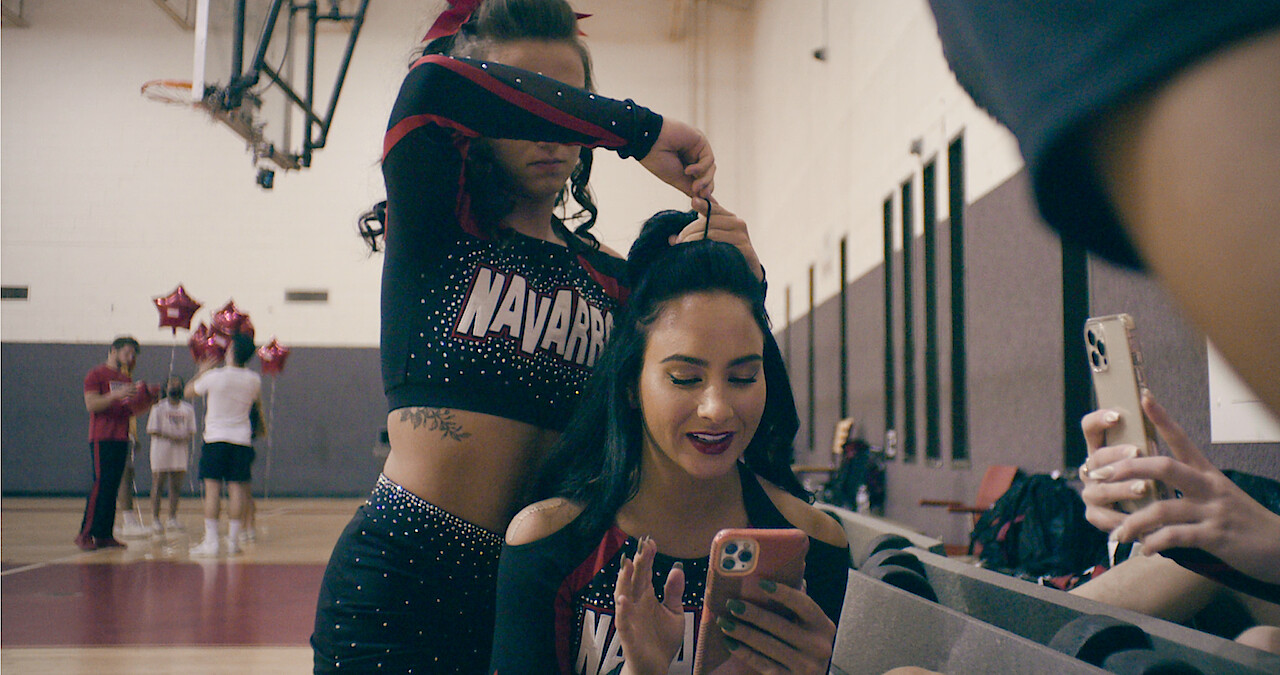
What defines the Navarro College cheerleaders? Is it their emblazoned black-and-red uniforms? Perhaps it’s their perfectly choreographed pyramids that would leave any Egyptian pharaoh shaking in their tomb. For some team members, being a Bulldog means sporting the signature hair pouf, tied back with an immaculate bow and long curls that bounce with every stunt.
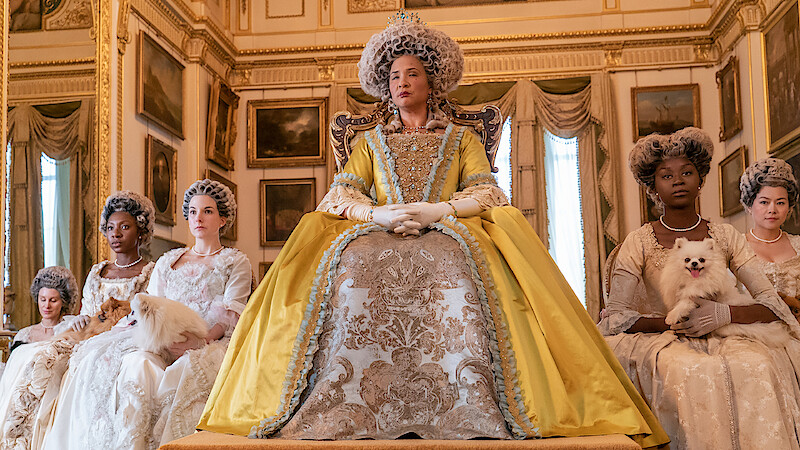
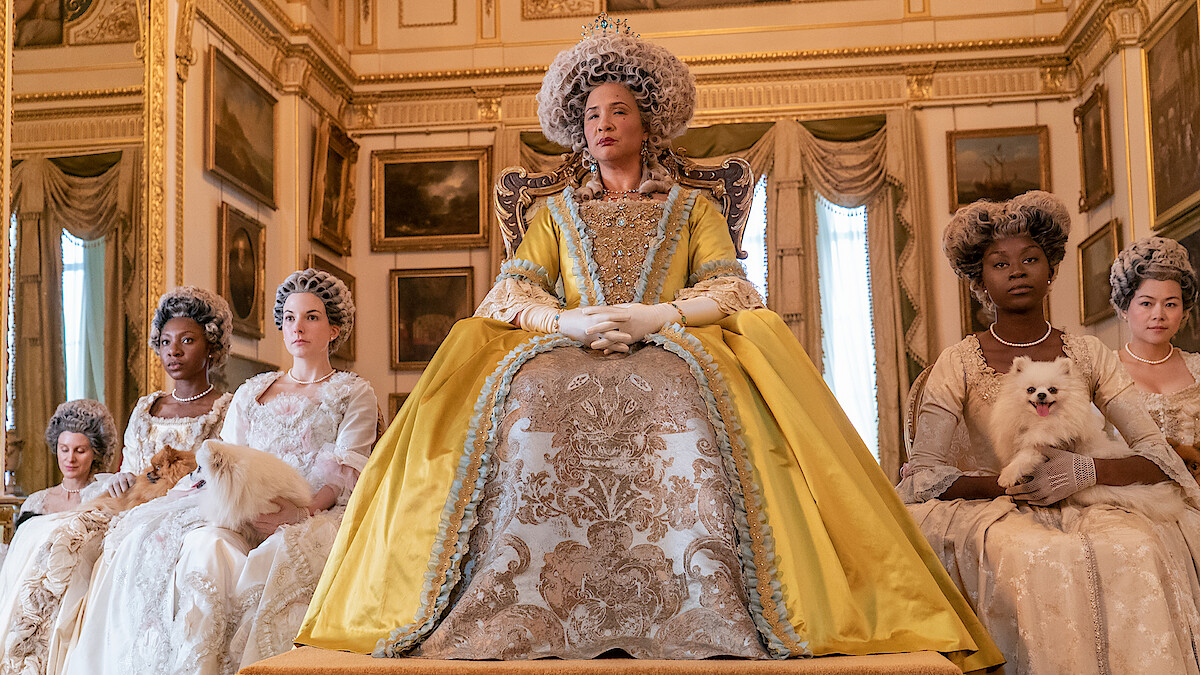
Throughout history, the hair pouf has had all the girls in a chokehold, from the queen of France, Marie Antoinette, to the princess of Laguna Beach, Lauren Conrad. With the hair teased down to the roots and the bangs combed over to create a bouffant look, the pouf is often regarded as an artifact of the aughts. Although it served as an embellishment to one’s Juicy Couture tracksuit during the pre-Obama days, the hairstyle was actually invented by Marie Antoinette’s hairdresser, Léonard Autié. Using 14 yards of gauze and a plethora of accessories — pearls, feathers and even model ships — the Parisian coiffeur created the extravagant look for the Duchess of Chartres before the queen of France made it famous.
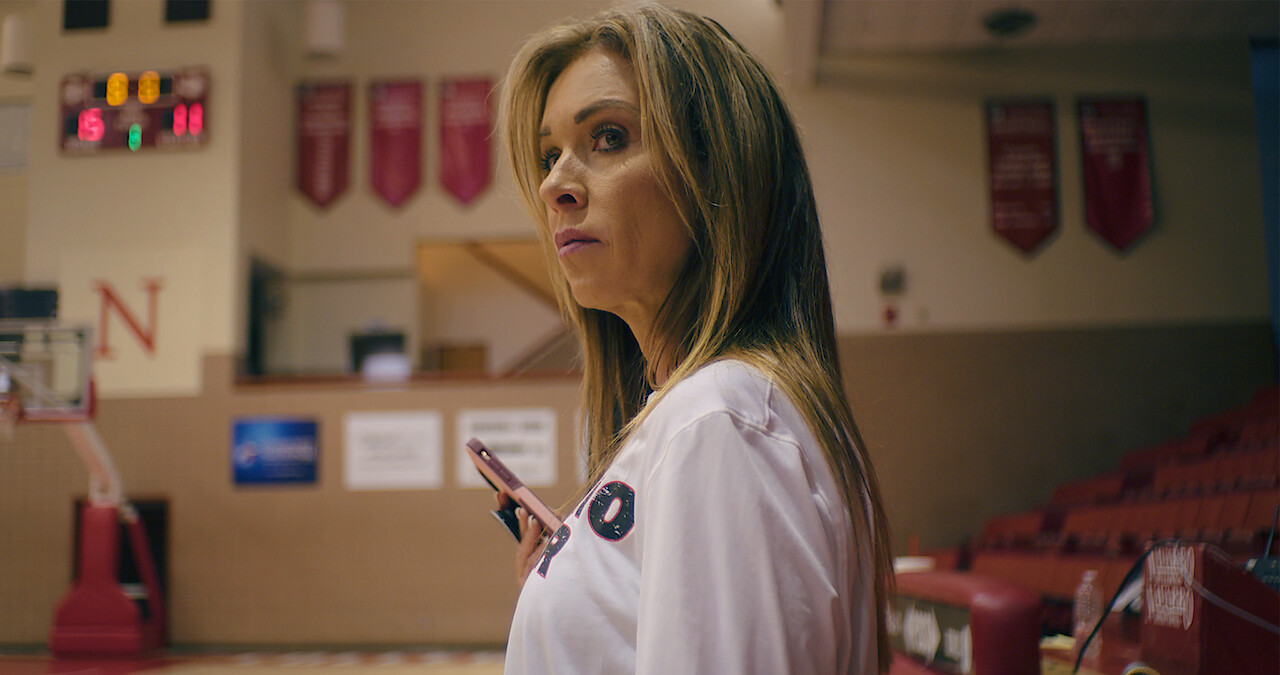
Although the hairstyle has come and gone, Cheer’s Navarro cheerleaders (and Florence Pugh) are keeping the tradition alive. We talked to cheer coach Monica Aldama and former Bulldog Morgan Simianer about the roots of this famous Navarro hair tradition.
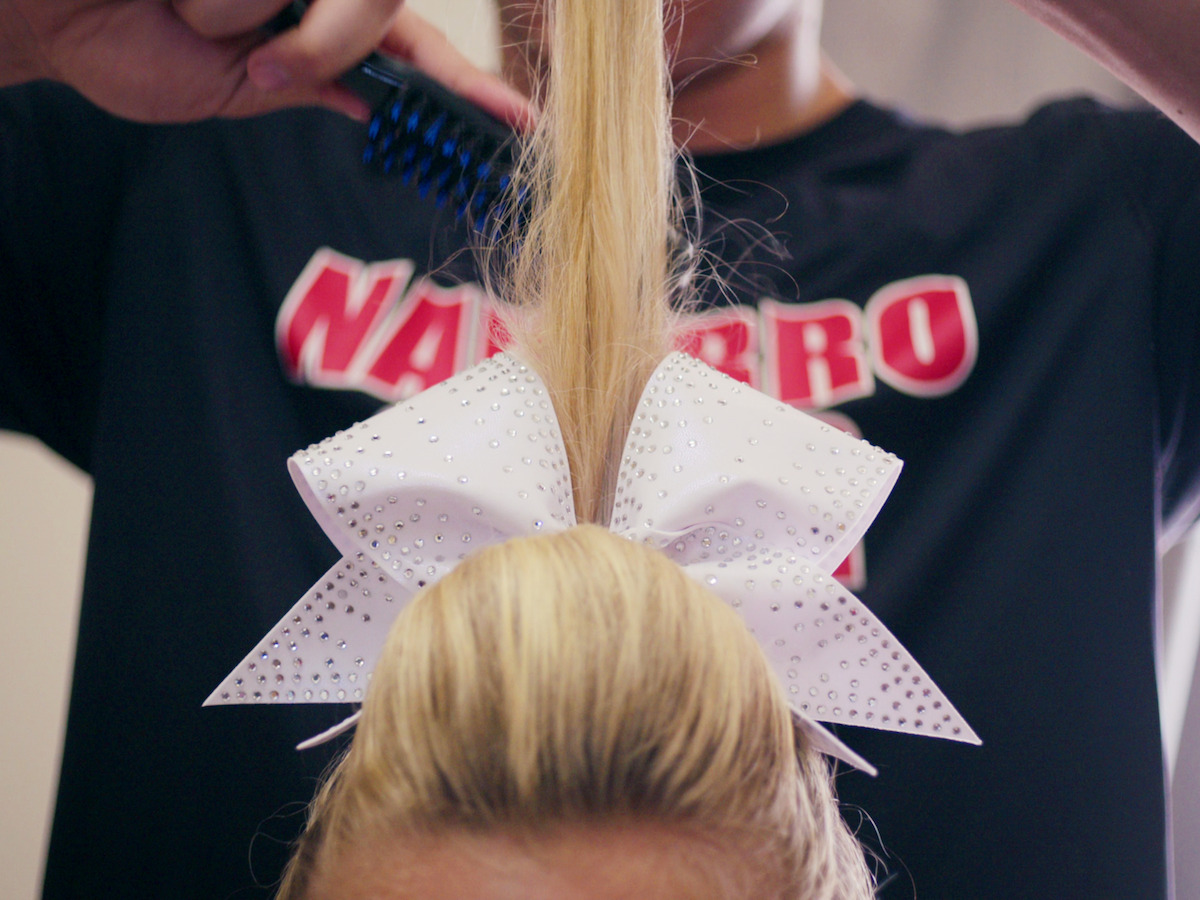
Aldama: [The pouf] is when you tease your bangs — your front part of your hair — and you pull it up to where it has some height in it.
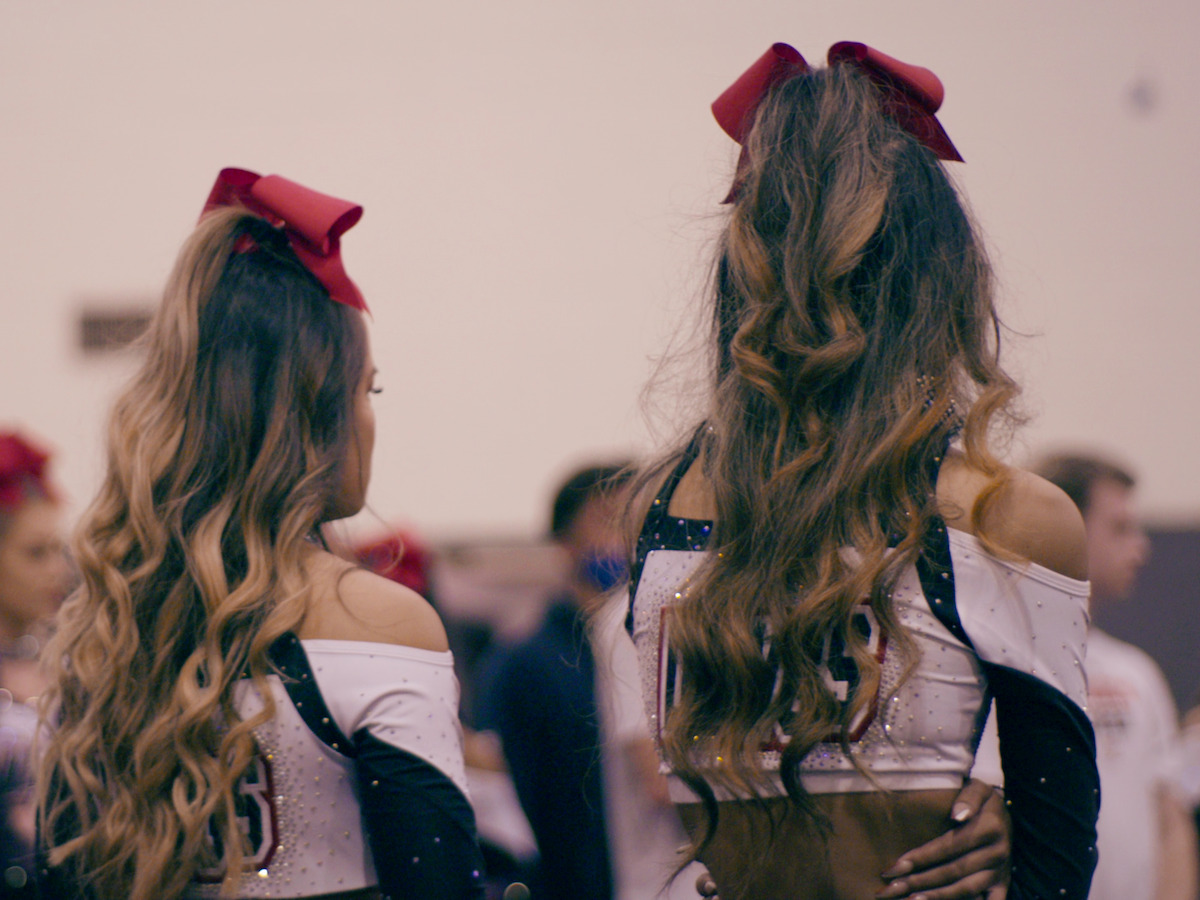
Simianer: It is obviously our signature hairstyle. It's a bump in the front, and then you have a high pony on top with your bow. And then, it's big and teased and curled.
As former Navarro alternate tumbler Alex Coatney says in Episode 7, “These ancient poufs! These poufs have been going around since the dinosaurs roamed the Earth.” Although it’s unclear exactly when the cheerleading pouf was invented, there are several factors in sports and fashion history that can point to its origin. Before cheer was considered a bona fide sport, cheerleaders raised spirits from the sidelines with long skirts, knit sweaters, rustling pom-poms and simple, loose hairstyles. Essentially, they were just there to look pretty.
During the ’60s, the beehive hairstyle was in vogue. Created in 1960 by Chicago-based celebrity hairstylist Margaret Vinci Heldt, the beehive was similar to the pouf with its towering silhouette, and would play a role in setting the trend for big hair in the decades to come.
In 1974, Jeff Webb, a former collegiate cheerleader, established the Universal Cheerleaders Association, which aimed to make cheerleading more athletic and stunt-based. This implemented new safety regulations, which involved securing one’s hair back. As the voluminous hair trend was still hot, cheerleaders found that with some teasing and bows, they could turn a boring ponytail into something much more exciting.
Aldama: The pouf was very popular many years ago. It's kind of lost its popularity. They used to say, "The bigger the hair, the closer to heaven." Some of the poufs got way out of control. And I don't mean Navarro, but just in the industry itself.
Simianer: The pouf itself is big in the cheerleading world. All Star cheerleaders use it a lot and there are some colleges that can do that as well, but it mostly came from All Star. A lot of other schools are more game day–based, so they probably won't do big glitz and glam and all of that. But for Navarro, it was just very fitting for our blinged-out uniforms.
This isn’t just a hypothetical question; it’s an age-old debate. Some team members, like Gabi Butler, admit to not being the biggest fans of the pouf, while others look forward to the tradition because they grew up admiring Navarro cheerleaders.
Aldama: Through that period of really big poufs [in the aughts], we were just within the trend. As it died out, we continued to have a pouf in the front just because we liked the way that we looked. Ours were not crazy, so they really fit with your hair. We've kind of toned it down a little bit to stay within the times, but we do still like to have our hair curled and big and clean at the top.
Simianer: It's half and half. Obviously, when you have the uniform on, you just light up and you're super excited. It's one of those things where, if you're in uniform, it's not complete unless you have your hair and makeup. The process of getting your hair done and getting to the finished look is just a hassle sometimes. We have to wake up hours before the boys do so that we can blow-dry our hair and straighten or curl it, and then do the hairstyle and do makeup on top of it. Sometimes it's like, "Ugh, we got to do it." But then once you have it done, you're just, "Let's take pictures!"
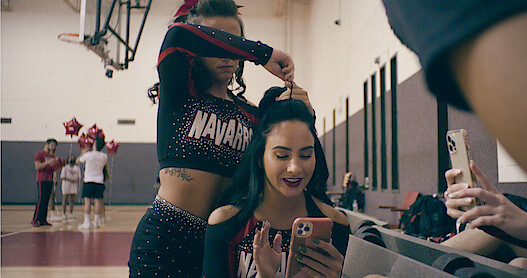
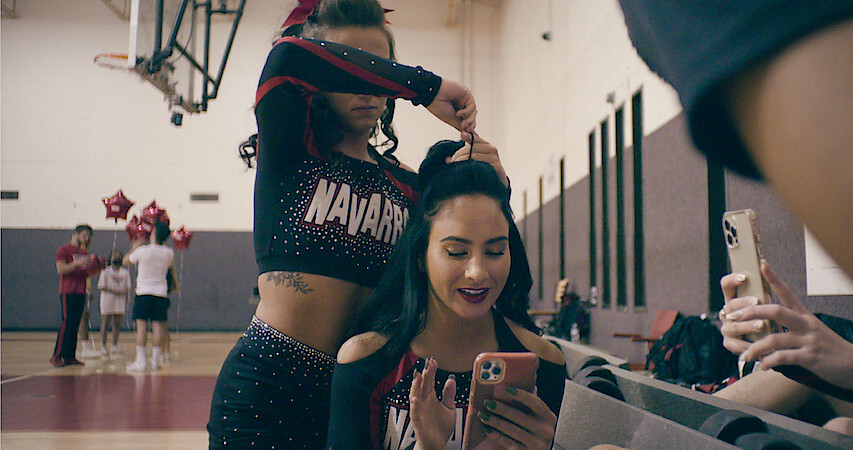
Getting ready for competitions is always a team bonding experience. From hair to makeup, the teammates are there to help one another out, but few can master the iconic hairstyle. Luckily, Navarro had their very own Léonard Autié in Austin Bayles, an alum featured in Season 1.
Simianer: Austin Bayles would always do my hair. Always, always. That was just a thing. There was a group of girls and we would literally be lined up waiting for Austin to do our hair because he would do it perfectly every single time.
Depending on whom you ask, the pouf can symbolize many things: defiance, superstition, a fashion statement, the unyielding power of hair spray. For Navarro, it’s the key to looking like a uniformed team.
Aldama: The most important part about appearance is how it makes you feel when you go out there and put your best performance on the floor. Do I think it sets you apart to look really good out there on the floor? Absolutely. Is that my personal opinion? Absolutely. Am I a judge? No. So, every judge has their own thoughts. For each individual athlete, the way that they feel about themselves is going to add value to their individual performance.
I'm very big on first impressions and appearance. We like for our uniforms to be top-notch and to look clean and precise. And obviously, hair comes with that, especially for women who tend to have longer hair. You want to make sure it's nice and put together, in whatever style you prefer.
In regard to the pouf, one cheerleading blogger writes, “This was the hairstyle years ago and still haunts our memories from time to time.” Whether the pouf conjures up chilling flashbacks or nostalgic memories, there’s one question we’re pondering: Will the pouf ever go away?
Aldama: It could; I'm open to changing and evolving with the times. With the way the industry's going — technology and just how busy everyone is — you do have to be open to evolving. At the end of the day, we'll always look beautiful out there.
Simianer: There are a lot of teams that will change their hairstyles year to year, but for us, it's like a part of our history at Navarro. Others before us did it, and [we] want to continue the tradition and have the pictures that they had when they won and ran into the ocean. It's just such a big family and we all love each other so much, so it symbolizes: "You're at Navarro; you put in the work. Here."
This interview has been edited for length and clarity.