Lee Jae-hyuk
Deep Dive
Uprising Ending Explained: Who Wins the Final Sword Fight?
The cast and director Kim Sang-man discuss the action-drama’s epic conclusion.
By Tudum Staff
Oct. 25, 2024
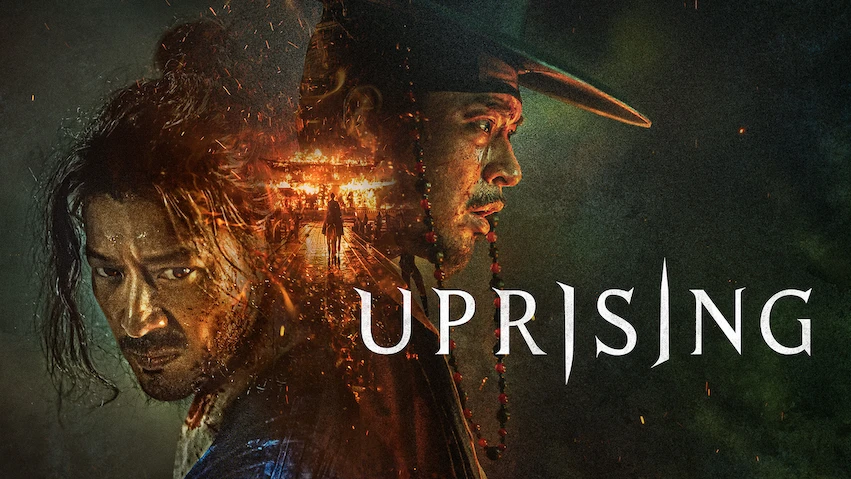
Director Kim Sang-man’s Uprising is a historical epic on a human scale. At the start, Cheon-yeong (Gang Dong-won) and Yi Jong-ryeo (Park Jeong-min) are unlikely friends — the former forced into slavery by family debt, the latter the privileged scion of Cheon-yeong’s new owners. This family of the deputy minister of defense expects the lumbering Jong-ryeo to become a military officer, so the adroit swordsman Cheon-yeong is enlisted as his fighting tutor, and they become something like brothers.
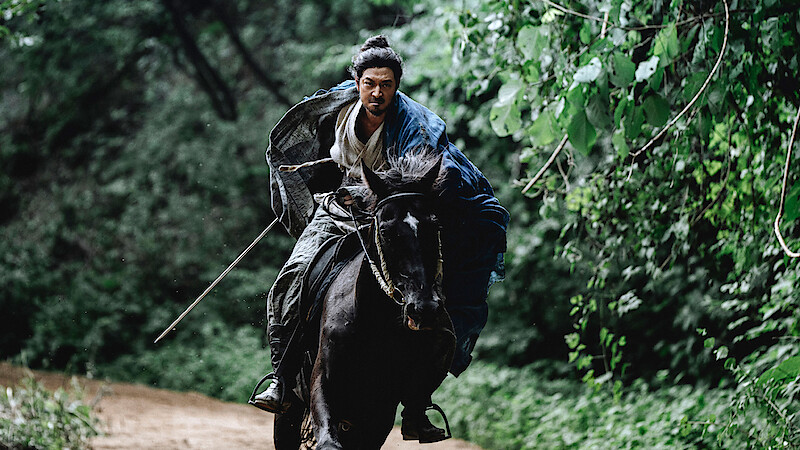
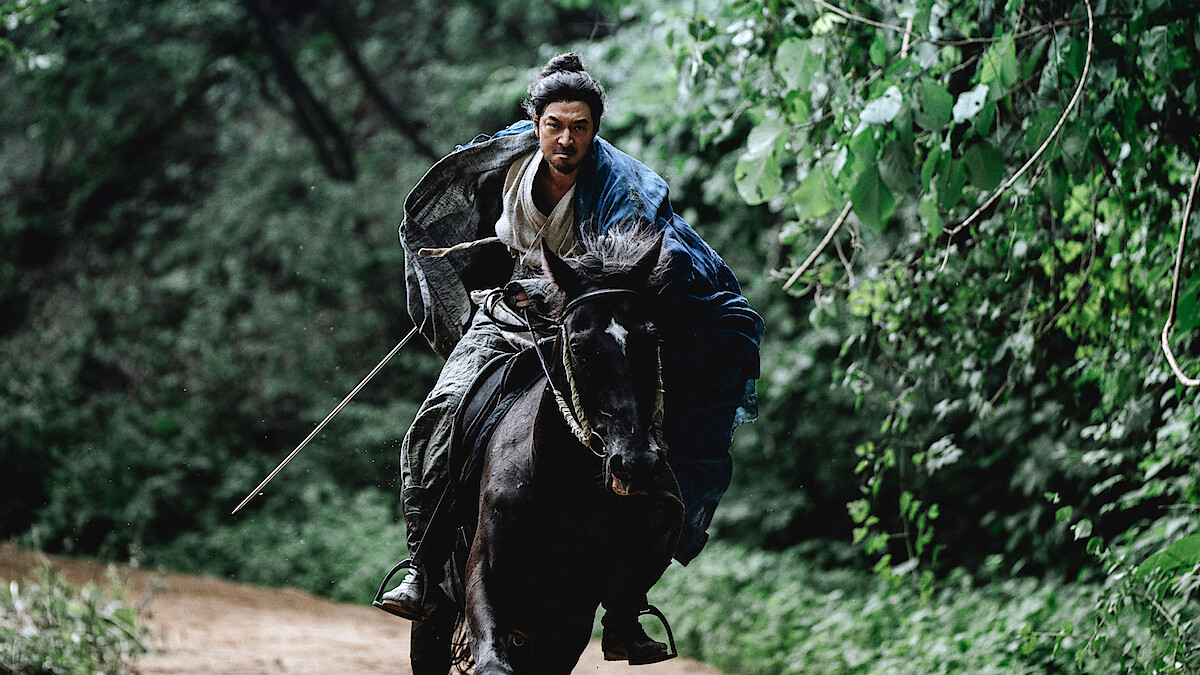
When the two reach adulthood, Japan invades the Korean Peninsula, the Joseon Dynasty begins to fracture, and the furious lower classes burn down Gyeongbokgung palace. In the scuffle, Jong-ryeo’s wife takes her and her child’s lives rather than be helped by Cheon-yeong — a “brute.” Based on bad intel, Jong-ryeo blames the impudent Cheon-yeong for their deaths and swears revenge as both men wander the country, fighting the Japanese and hunting each other.
“Uprising is a genre film that offers … gratification through relentless, exhilarating action scenes and its clear storyline,” Gang tells Tudum. But it’s also “a period film that conveys profound messages and themes.”
We spoke to Kim, Gang, and Park about the film’s social subtext, how they prepared for its epic battles, and why the film ends with crates of salted noses.
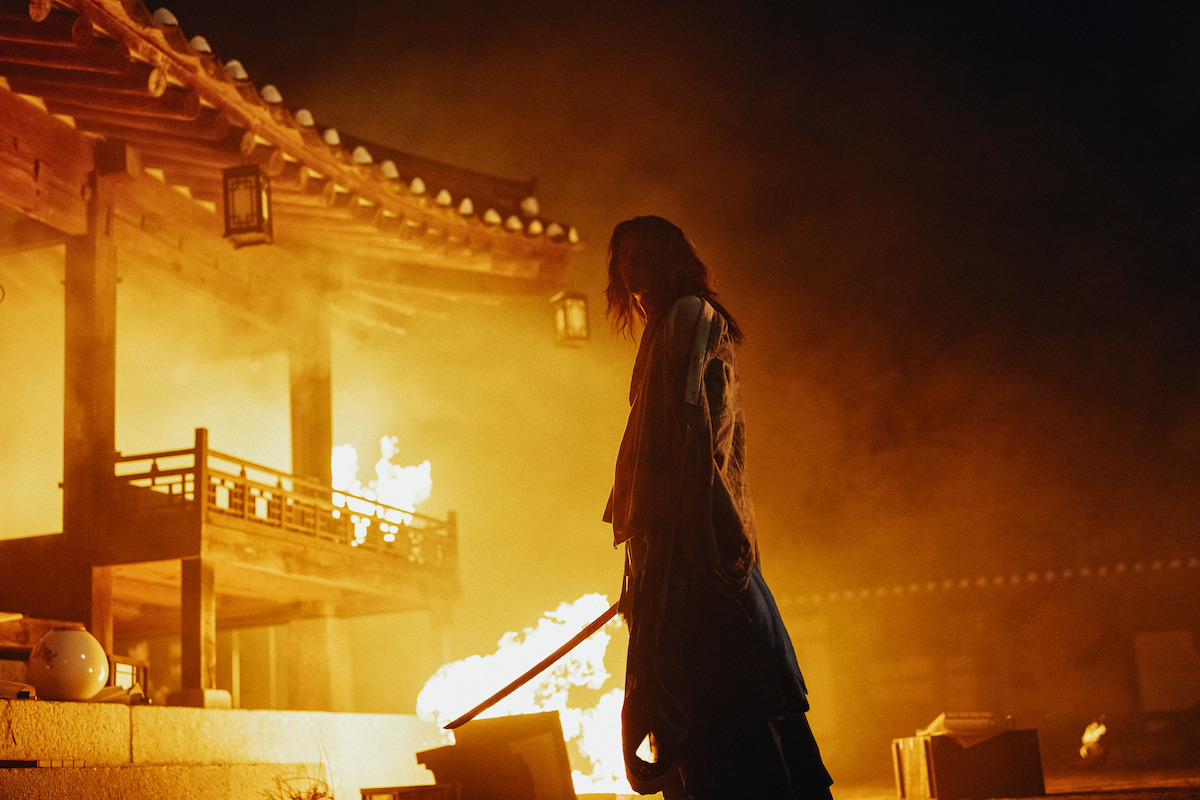
The characters are mostly fictional — save for some historical exceptions, like the pompous King Seonjo (Cha Seung-won) — but the backdrop is real. Japan invaded Korea in 1592, sparking the Imjin War, a widespread and terribly destructive confrontation that lasted, on and off, until 1598. In the aftermath, Korean society struggled to reunite. And Gyeongbokgung palace really was destroyed, before being restored in the 19th century. It’s now a tourist attraction.
Screenwriters Shin Chul and Park Chan-wook (best known as the director of Oldboy, Decision to Leave, and other lauded films) boil down these complex historical forces into three representative characters: Cheon-yeong, fighting for the people; Jong-ryeo, fighting for the established order of monarchs and nobles; and the fearsome Japanese general Genshin (Jung Sung-il) — known as the Nose Snatcher, because he severs his enemies noses on the battlefield — fighting for trophies.
“Cheon-yeong is a fictional character, but I am sure there existed people who attempted to get out of their social status by making a contribution to the country during the chaotic times, and also people who dreamed of a new world,” Gang tells Tudum. “In this sense, I believe Cheon-yeong is not a completely imaginary figure. It was just that his records were not written in history.”
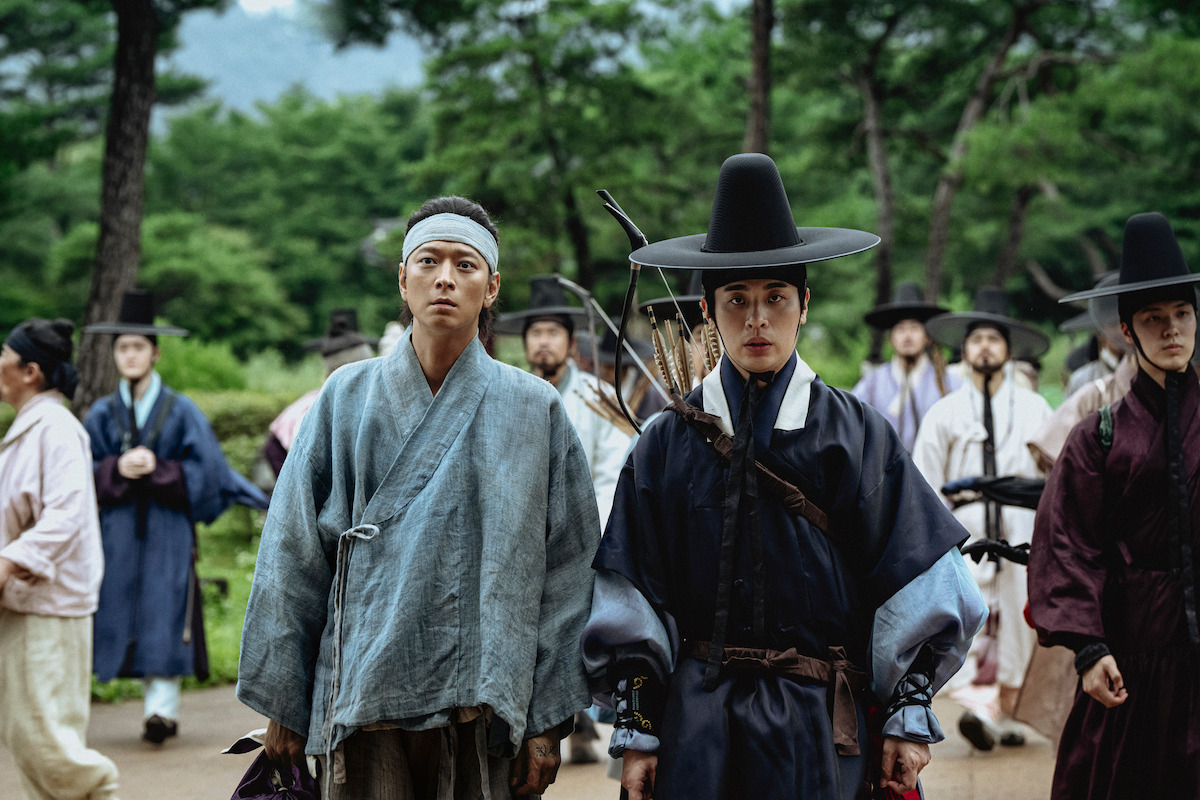
Uprising begins with the story of Jeong Yeo-rip, a real-life figure from the late 16th century, who “asserted that all people are equal, and should have no master,” according to the opening titles. On his commune, “noblemen and slaves shared food and drink and practiced martial arts together.” For this, he was charged with treason and takes his own life with a sword to the throat; Seonjo hangs his followers’ heads outside Gyeongbokgung. But the king’s fear of Jeong’s philosophy — “that even a butcher, courtesan, or slave could occupy the throne,” as he puts it — runs through the film.
“The Joseon Dynasty was a sovereign state where the social class system was rigidly put in place,” Kim explains. But it “began to falter after the Imjin War, making this period an apt setting to explore the themes of class and society depicted in the film. The two characters, Cheon-yeong and Jong-ryeo, also embody emotional journeys that mirror the societal shifts of their time.”
In desperation to defend the country, the people form the Righteous Army (volunteer militias) to take on the Japanese, and a representative of King Seonjo promises in the film that everyone on the class ladder will move up a rung if they fight. As depicted in Uprising, it was a time when the crude rifles that existed were no match for adept swordsmanship, and even a clever rock-thrower with a slingshot could knock a professional army off balance.
“It may look different from modern Korea, where such [class] distinctions are not officially recognized, but we have gradually become a new form of class society, where expressions like ‘dirt spoon’ and ‘gold spoon’ are used to classify people based on wealth,” Kim adds. “I believe the two different [eras] may not be that different.”
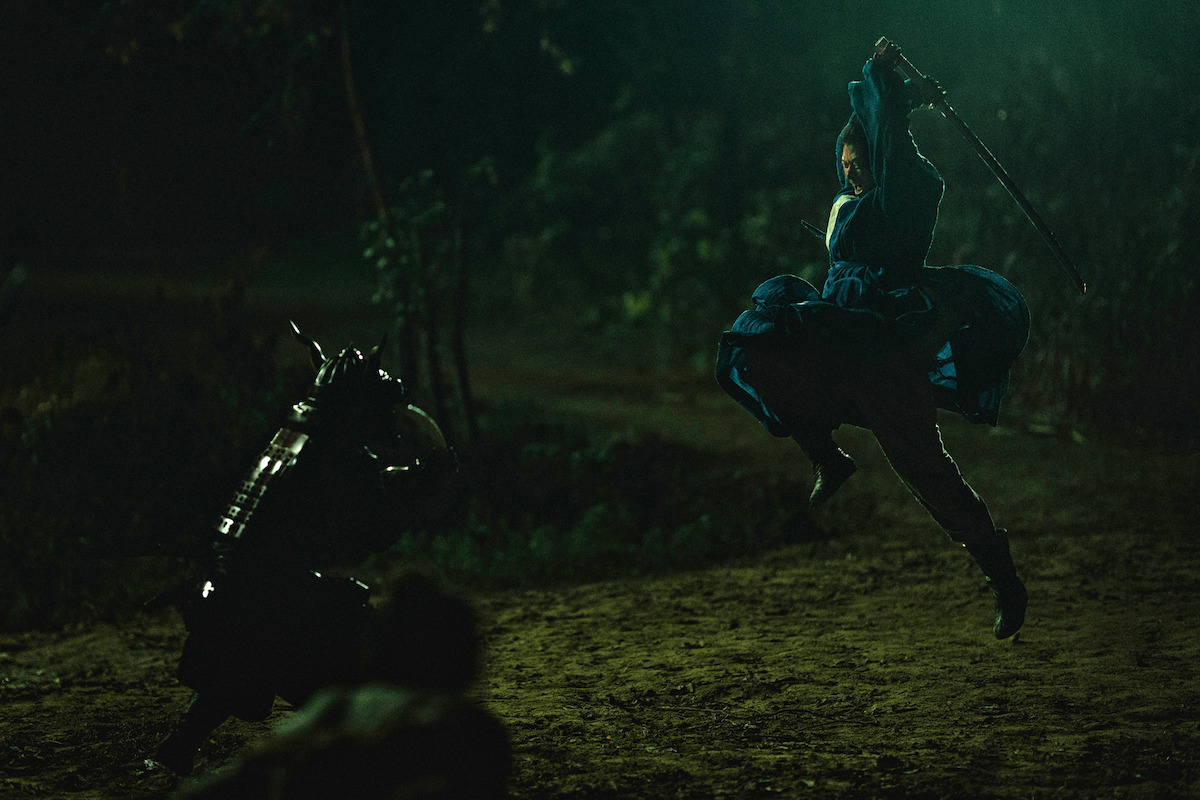
Before the war, Jong-ryeo has trouble passing his military service exam, so, in an age before facial recognition or photo IDs, Cheon-yeong takes it for him. He places first, earning a sword and a distinctive blue robe for Jong-ryeo, whose father has promised Cheon-yeong his freedom in exchange. But then the deputy minister reneges, and during the destruction of Gyeongbokgung palace, Cheon-yeong snatches the robe and escapes.
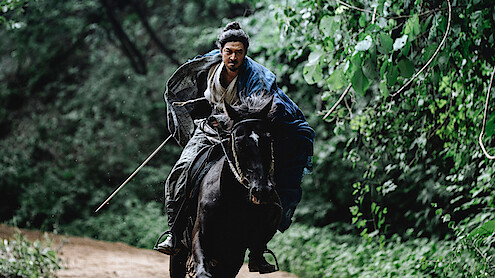
Donning it in guerrilla battles as he employs his awesome fighting skills, he achieves mythic status among the Japanese rank and file, who fearfully call him the Blue-Robed God. “That was the color of the officer serving the royalty,” Kim explains. “Although Cheon-yeong is of a slave class, he considers the blue robe to be a gift that he has earned through his ability and uses it as a symbolic [representation of] his desire to be freed from the slave class.” In Uprising, the director explains, “the use of color is less about the inherent meaning of the colors themselves and more about how their meanings change as ownership shifts.”
Gang adds, “Cheon-yeong, being a[n enslaved person] at the bottom of a strict hierarchical society, naturally has a different appearance.” Initially, he “wears rugged clothing, his face is not clean, he has scars all over his body, and so forth. I have appeared in several period films, but this was my first time assuming the role of [an enslaved person]. Actually, it was more of a surprise and curiosity for the fans than for me to see ‘Gang Dong-won as an [enslaved person].’ … Of course, it would have been horrific if such things [as happen to Cheon-yeong] happened to me in real life. If I were Cheon-yeong, I think I would have attempted endlessly to escape as well.”
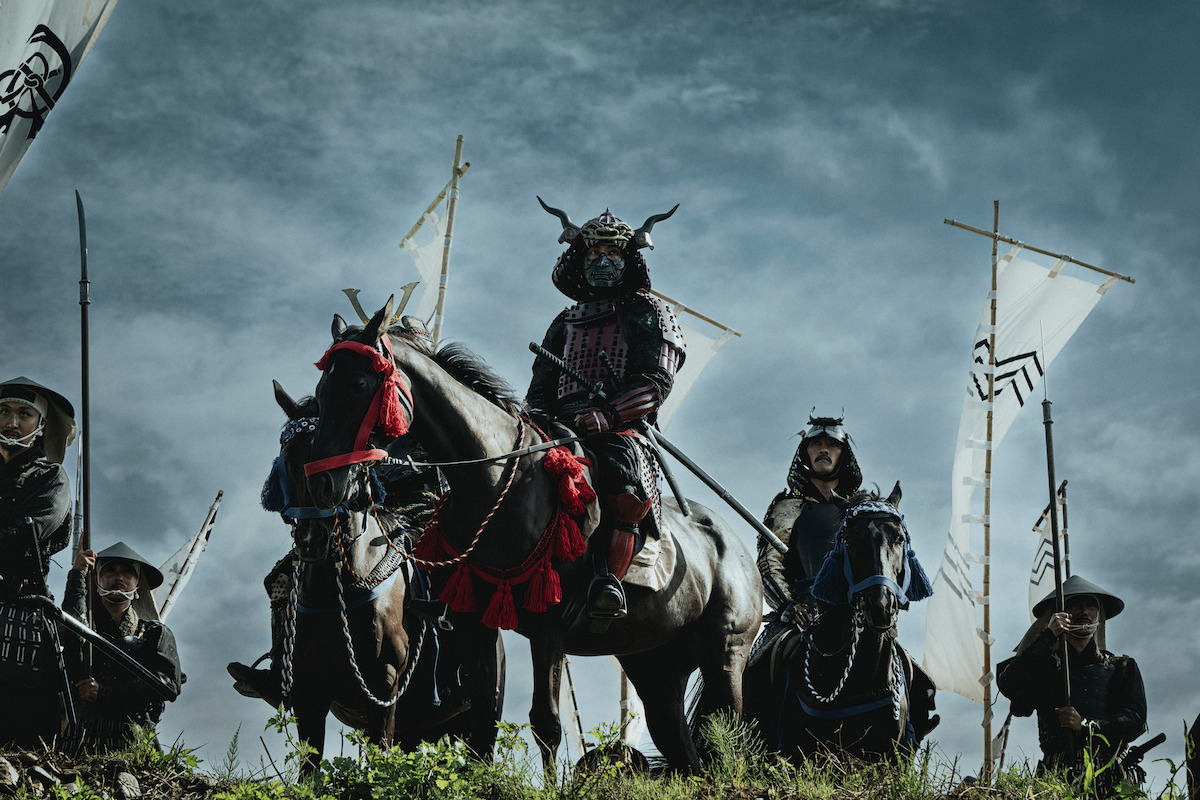
When the war ends, King Seonjo struggles to rebuild, lacking resources after the long fighting — even dry lumber. So he enlists Jong-ryeo to aid the hated Genshin and his men in finding the country’s valuables, plundered during the conflict and still unrecovered. The Righteous Army have been denied their promised rewards for fighting and also seek these treasures.
When the royal Korean forces betray their Japanese “allies,” the latter see it coming, and both sides lose most of their men in the subsequent skirmish. Then the last scraps of the film’s central militia fighters enter, and Cheon-yeong, Jong-ryeo, and Genshin reunite on a foggy beach for an epic three-way sword fight between ostensible adversaries.
“Typically, a showdown between two characters tends to frame one as the protagonist and the other as the antagonist, but I didn’t want to construct Cheon-yeong and Jong-ryeo in that way,” Kim explains. “Instead, I thought it would be interesting to position Genshin as an outsider with different motives and as an observer who discerns the deep emotions between the two. To achieve this, I used the sea fog to sometimes blur identities, exclude someone, or leave someone isolated.”
While fighting, Cheon-yeong finally gets to explain that he tried to save Jong-ryeo’s family at Gyeongbokgung. Then Genshin strikes down Jong-ryeo, and Cheon-yeong cuts off Genshin’s hand and kills him with his own sword (as prophesied earlier in the film). Cheon-yeong rushes over to Jong-ryeo, dying on the sand. “Cheon-yeong,” he says. “Am I still your friend?” Cheon-yeong, weeping, nods. “I’m sorry,” Jong-ryeo says, as he unties his signature red ribbon, now brown with gore, gives it to his friend, and dies.
“The most fascinating part of this [movie] was expressing emotions through swordplay,” Gang says. “I had to express feelings through physical movements while conveying emotions at the tip of the blade. … In the scene where Cheon-yeong faces off against Jong-ryeo, the sword swings are heavy, and the body movements appear weighted. This reflects the emotional difficulty of fighting a friend. In contrast, when he is fighting the Japanese soldiers — and Genshin, in particular — Cheon-yeong appears almost excited, with lighter body movements and more flamboyant swordplay.”
The complex choreography of the fight sequences throughout the film were an equally exciting challenge for Gang’s co-star.
“I always get nervous before action scenes, because I have to make sure that I am not hurting my co-stars,” Park says. “Thankfully, I could complete the scenes without any issues, because the senior cast members guided me through the scenes.”
In the film’s penultimate scene, after a ship arrives at port bearing the flag of the Royal Guard, King Seonjo rushes to the twelve crates that have been brought to him — which contain Koreans’ severed noses, packed in salt.
“Japanese soldiers were rewarded for the noses of the enemy that they had cut off, and the more noses they presented, the higher the reward,” Kim tells Tudum. “As such, noses were like treasures to [the Japanese soldiers]. To King Seonjo, who needed funds to rebuild Gyeongbokgung palace, the chests were [supposed] to be filled with treasures of gold and jewels. However, once the ‘treasure’ was uncovered, it revealed the mutilated bodies of his own people.
“While it might [have been] satisfying to portray a climax where King Seonjo, who could be seen as the greatest villain, meets a grisly end, I couldn’t distort historical facts. Instead, I aimed to express the people’s deep-seated resentment and anger toward King Seonjo, who abandoned his people.”
Uprising ends with the masses celebrating their rejection of the king, and Cheon-yeong and his surviving rebels resolve to form a new Pan-Unity group, to create “a world where everyone is united.”
Uprising is now streaming on Netflix.