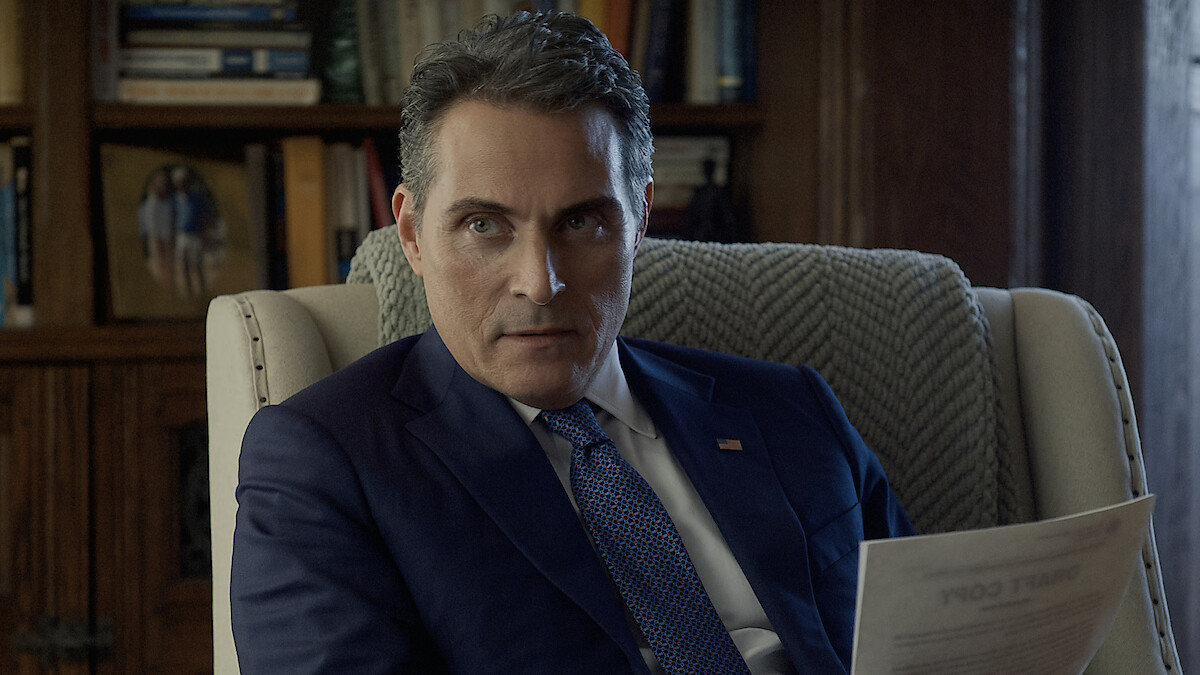
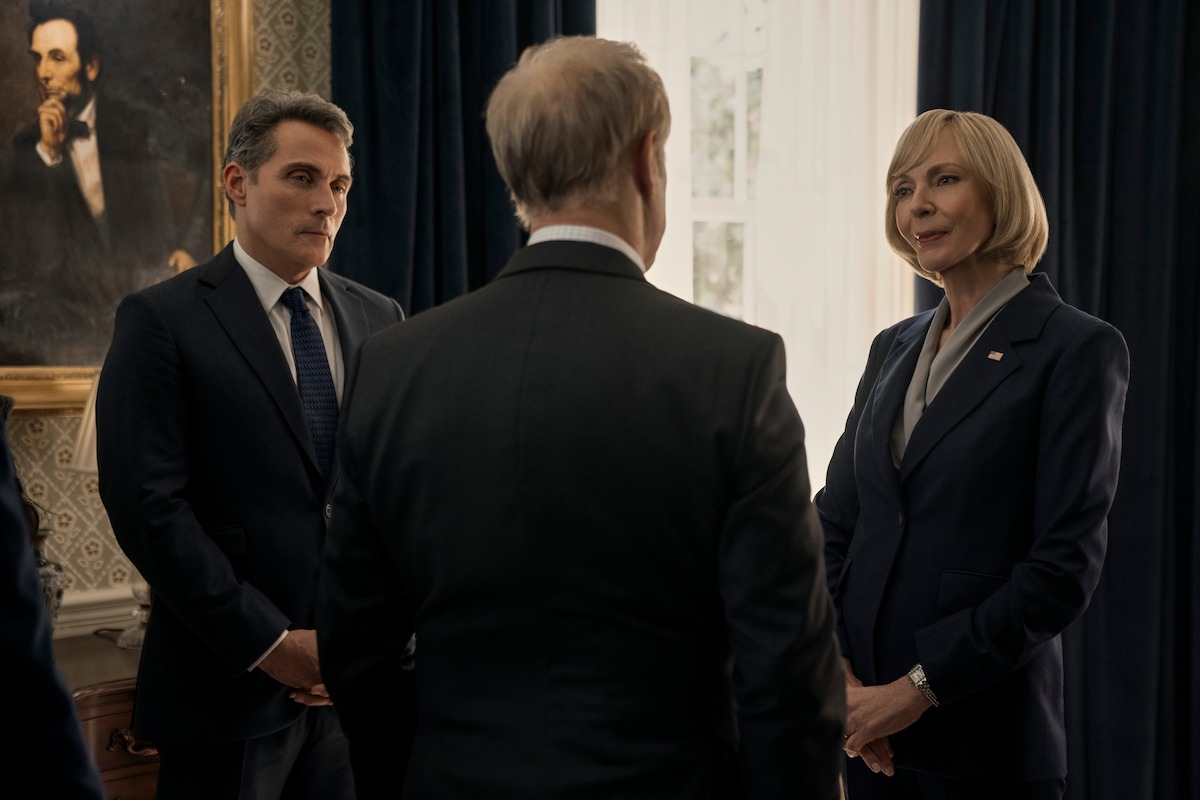
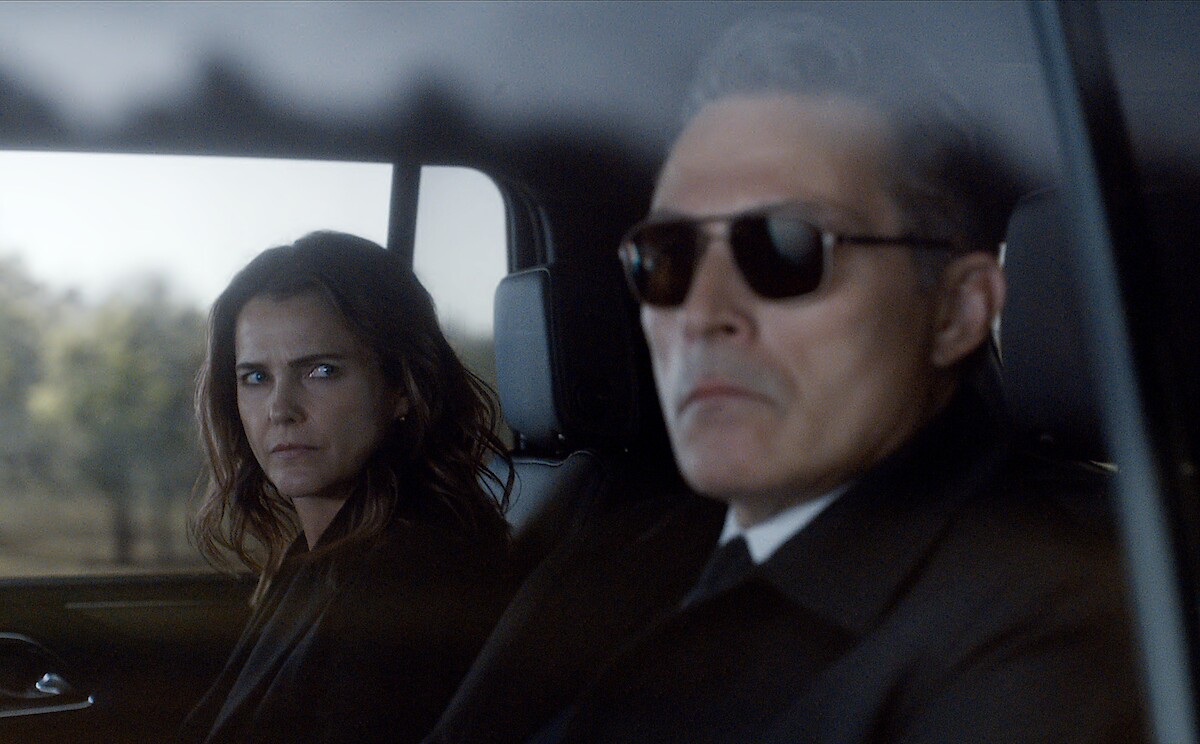
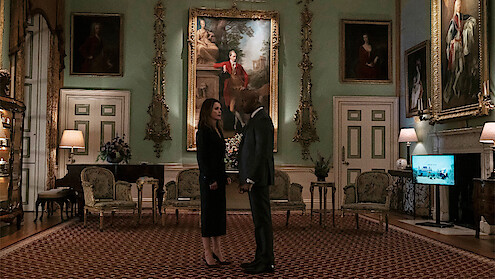
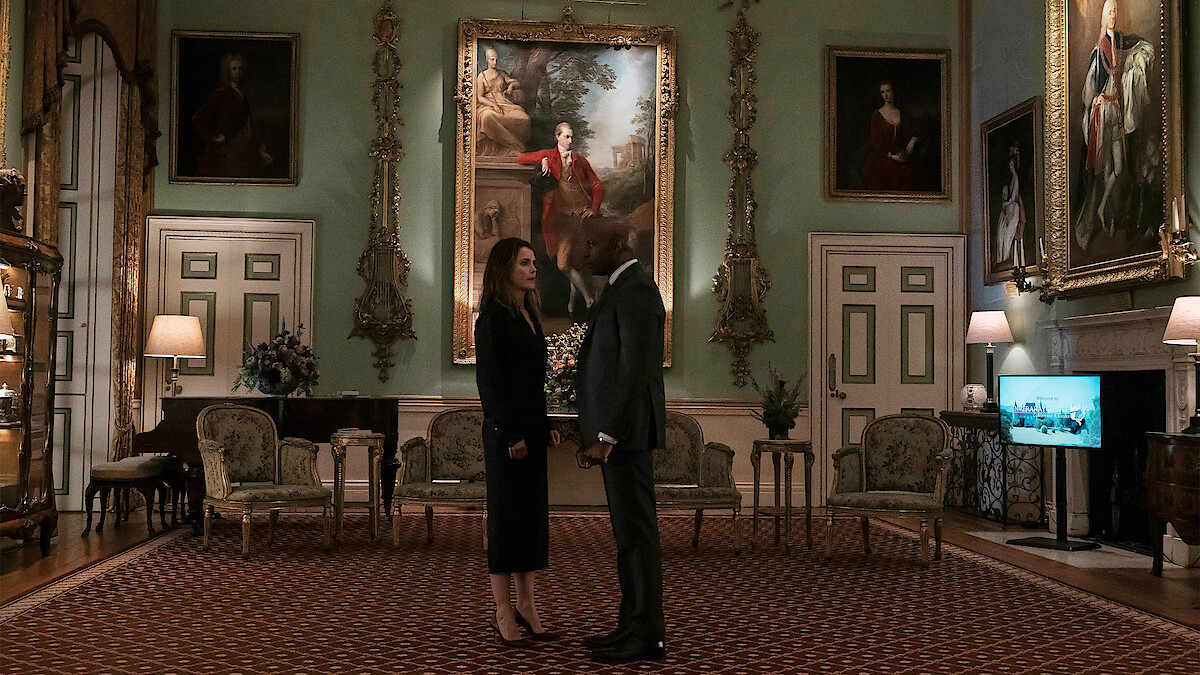
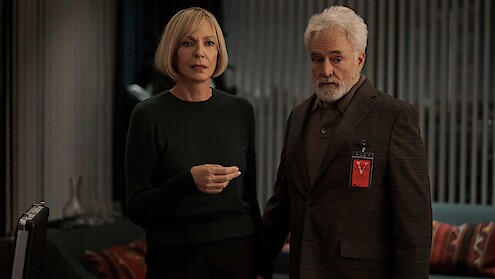
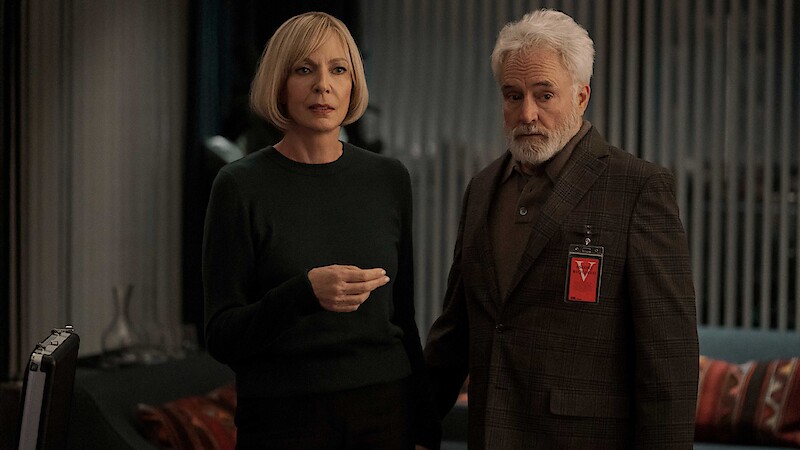
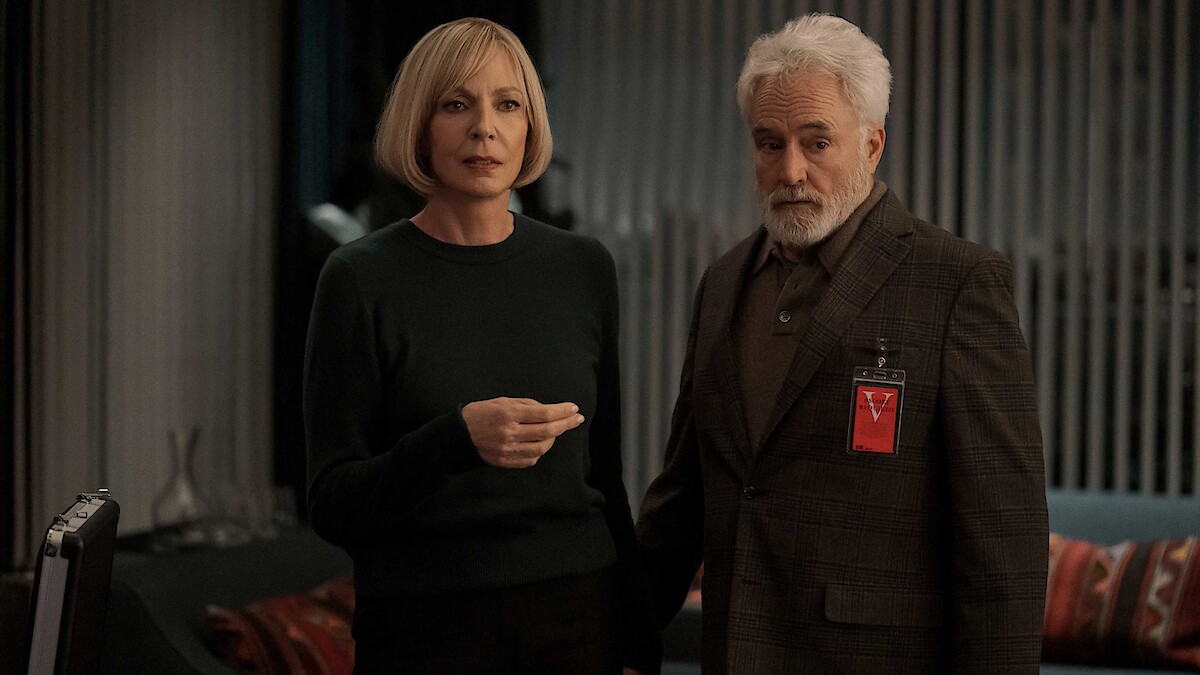
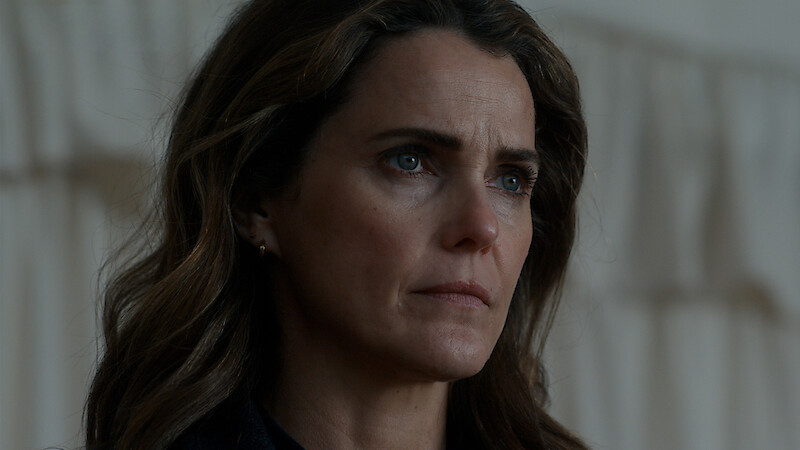
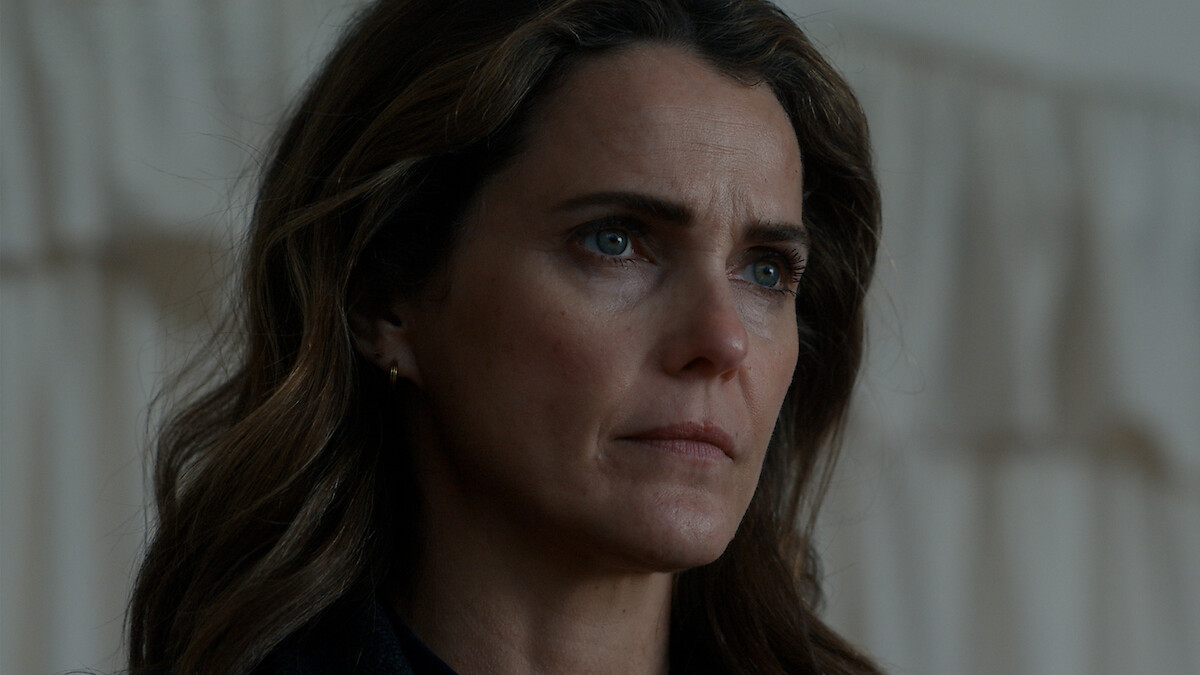
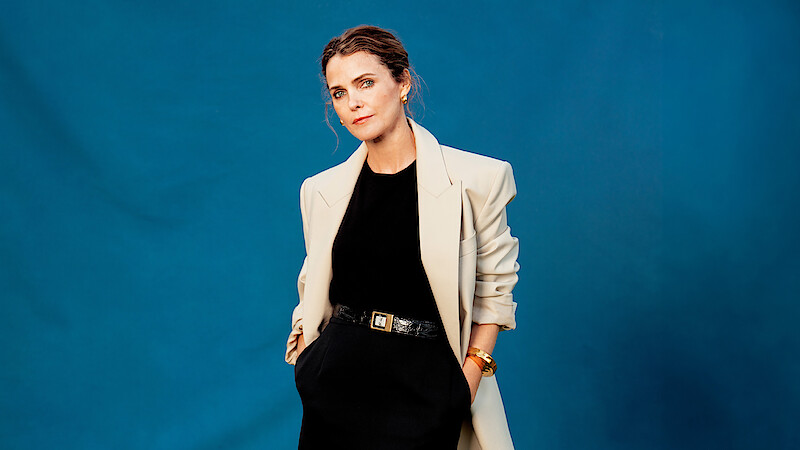
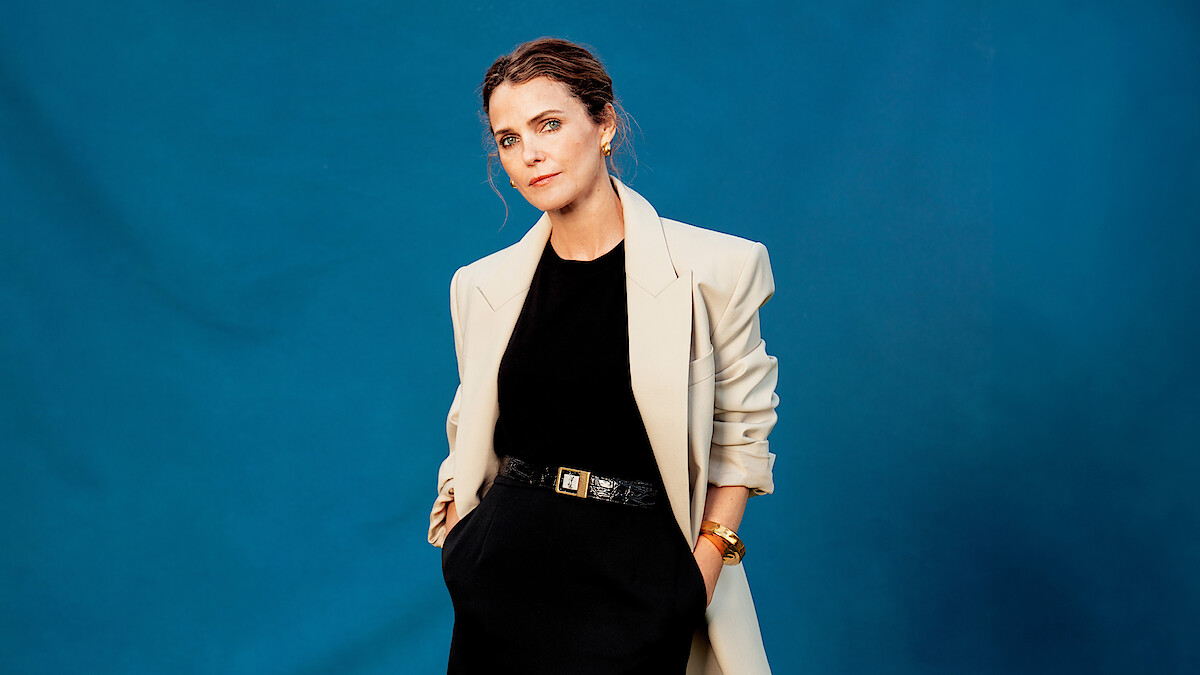
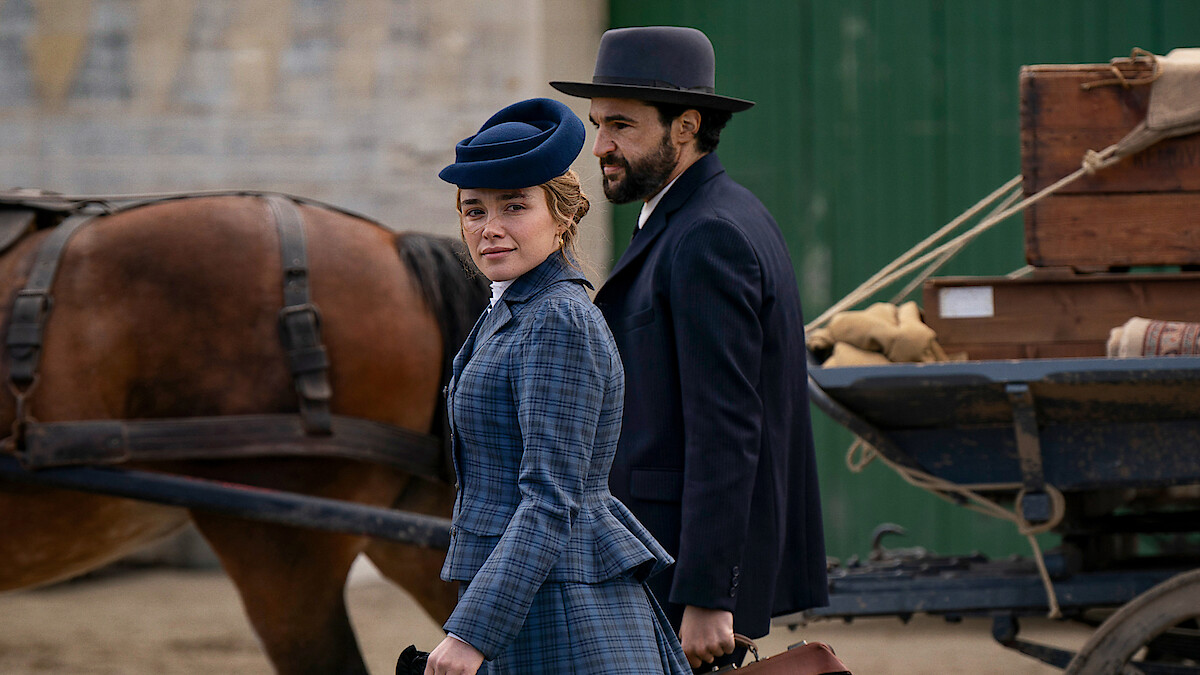
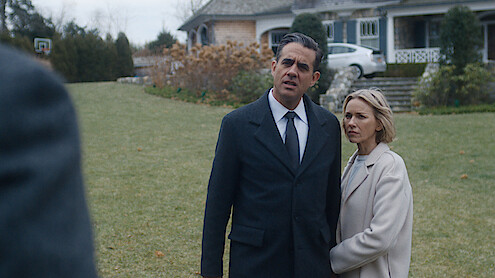
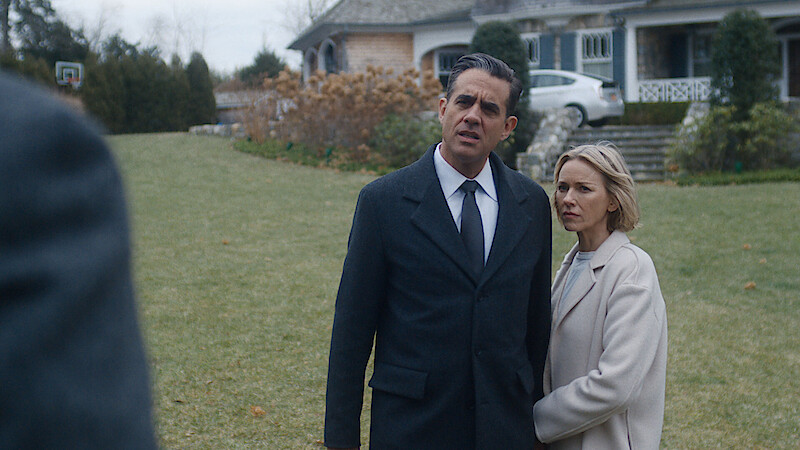
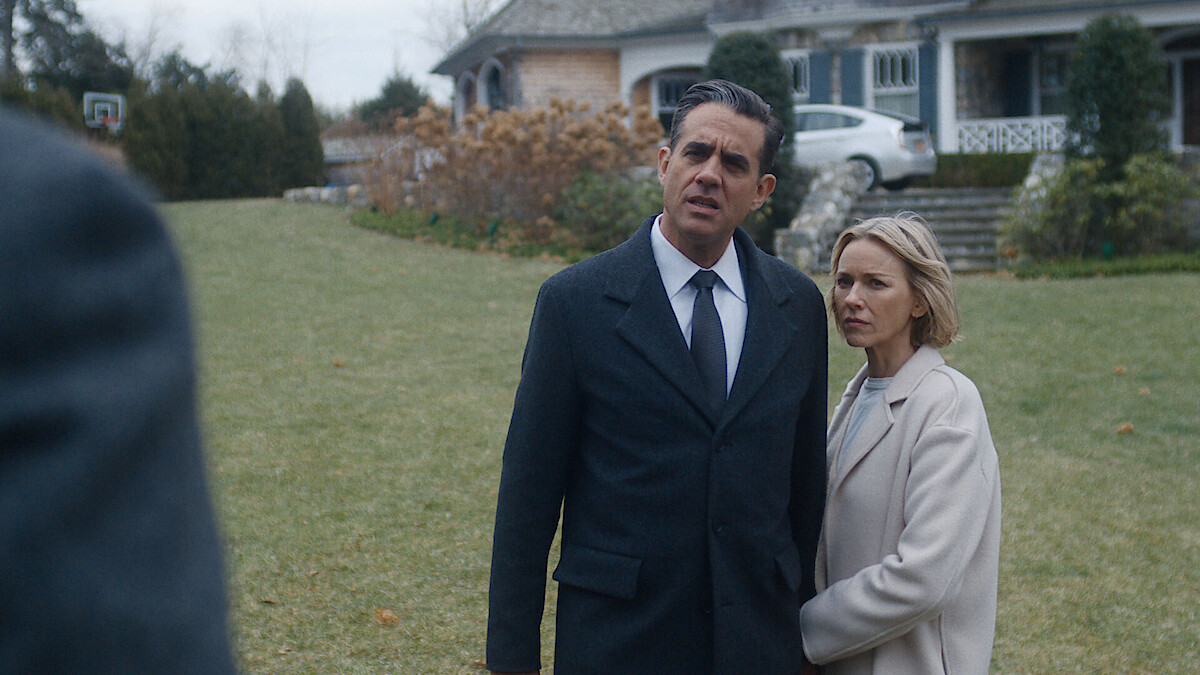
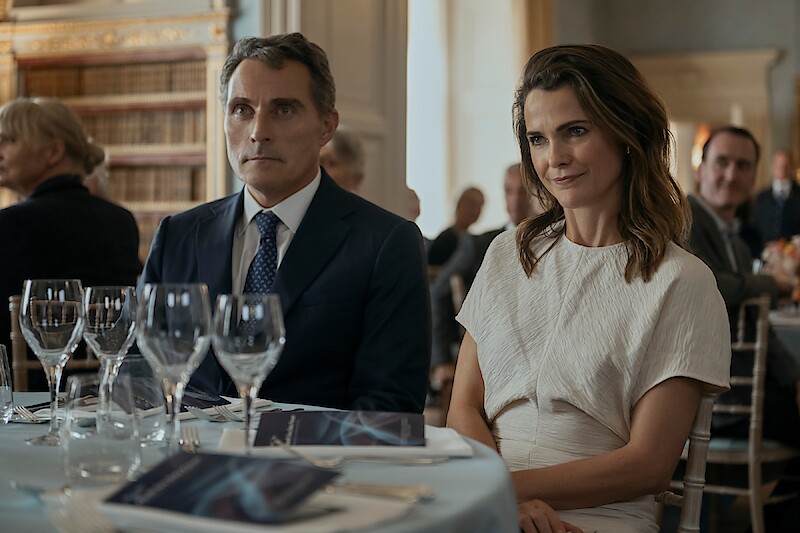
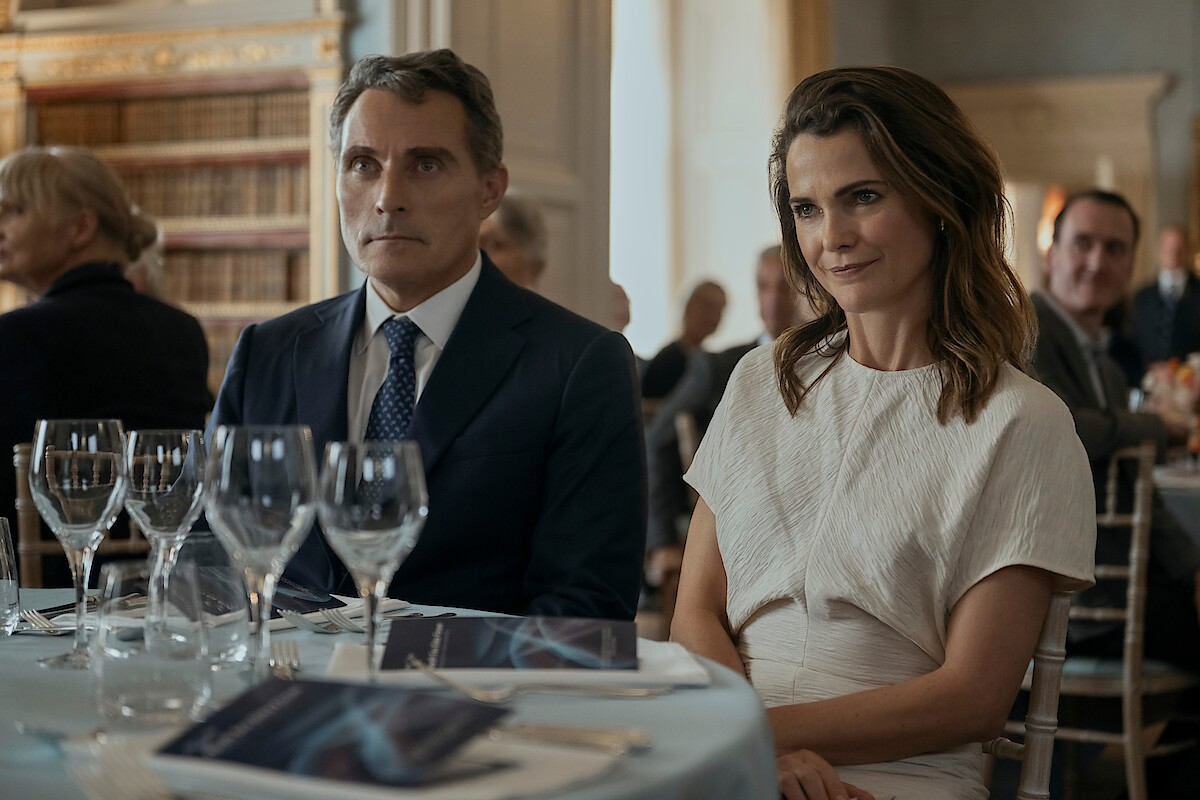
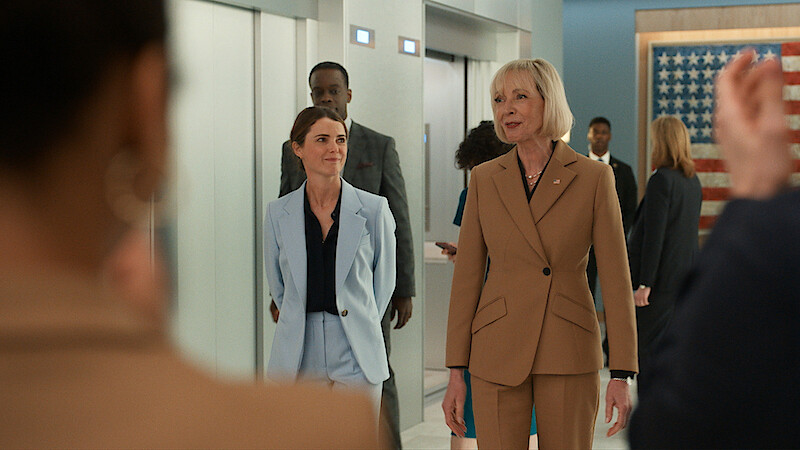
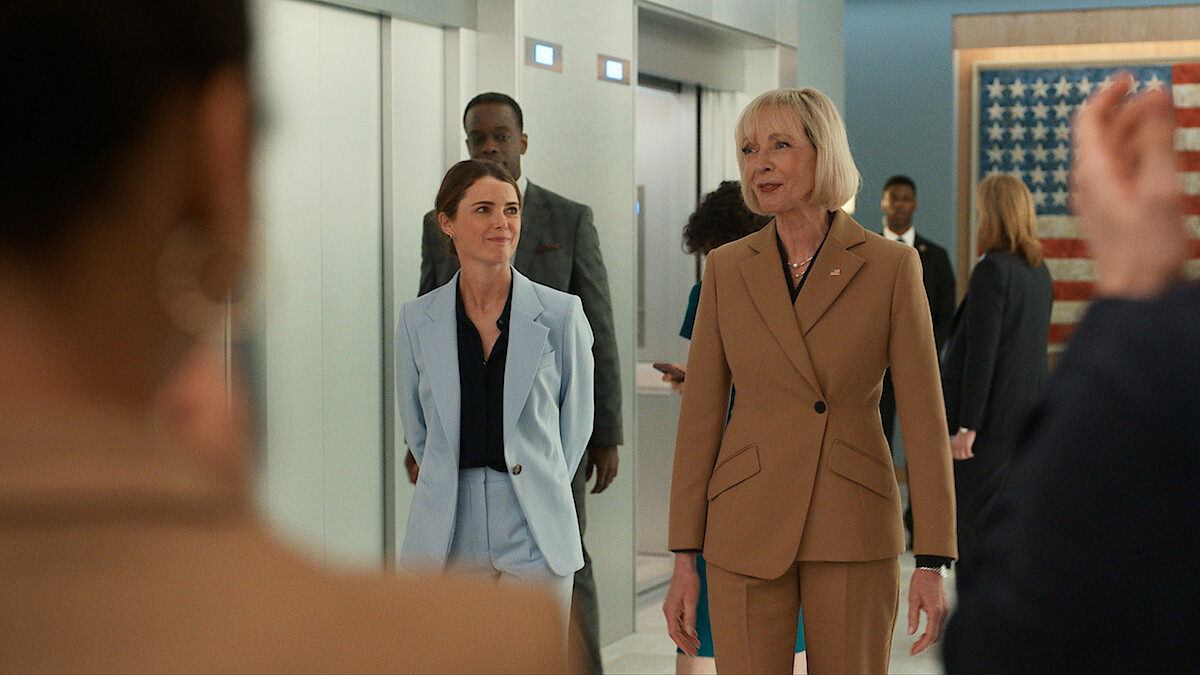
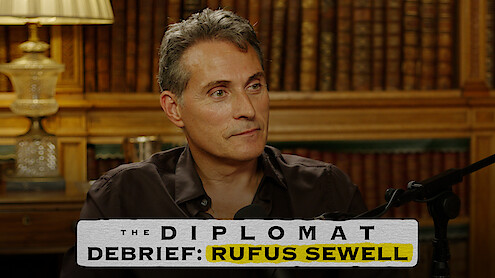
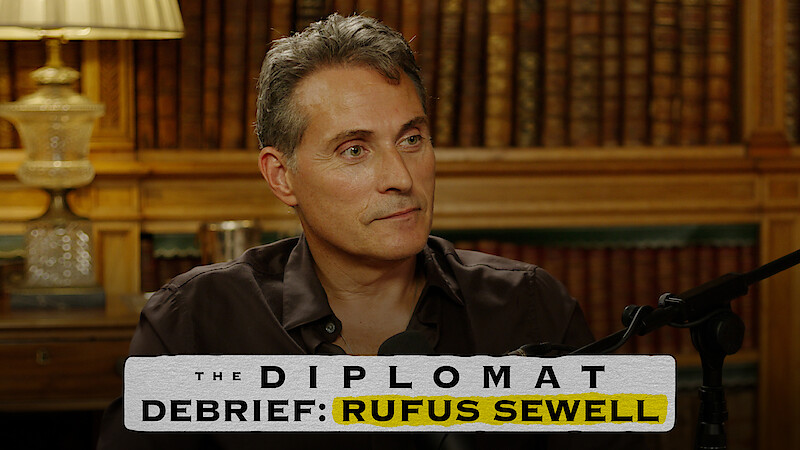
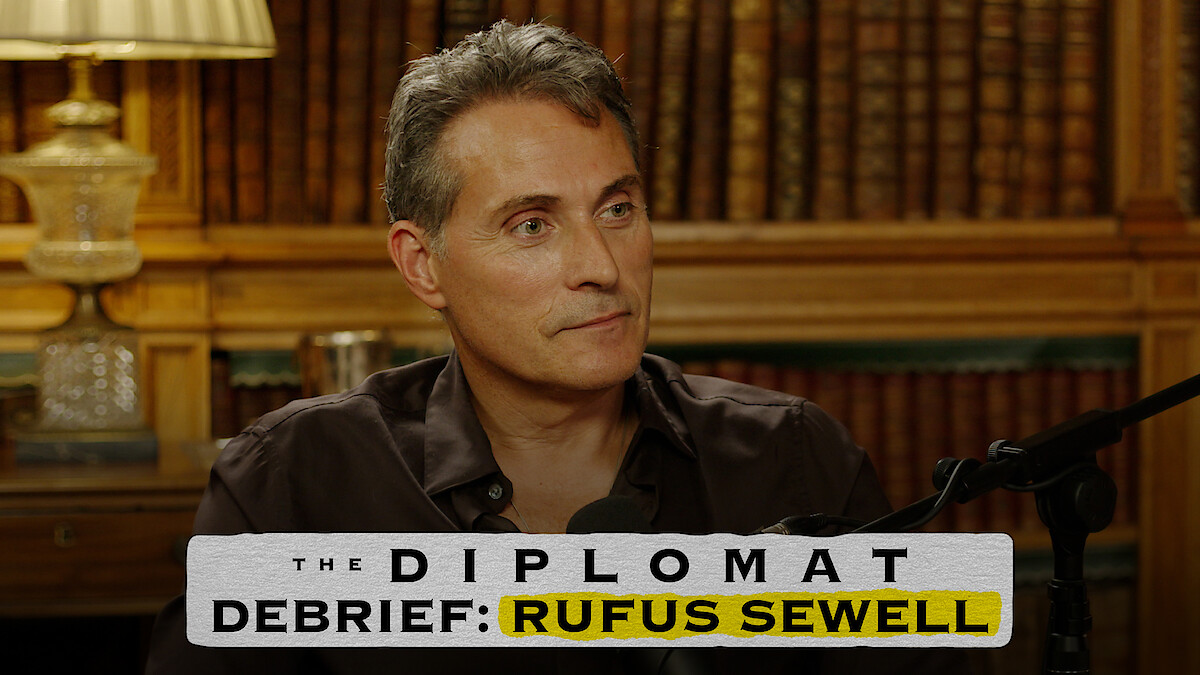
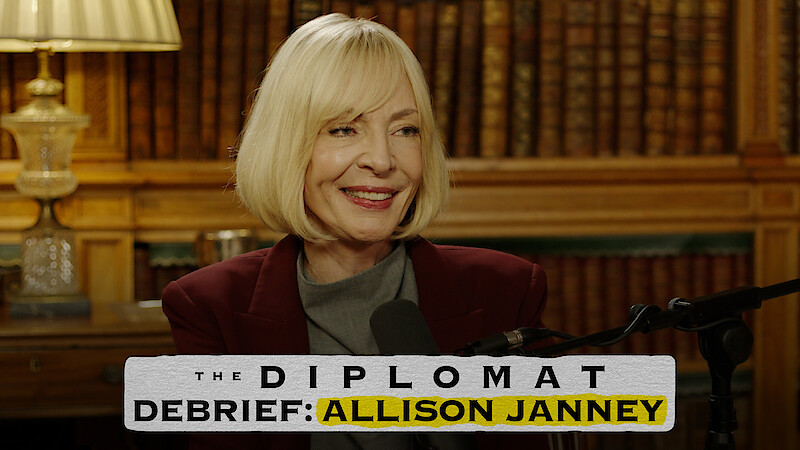
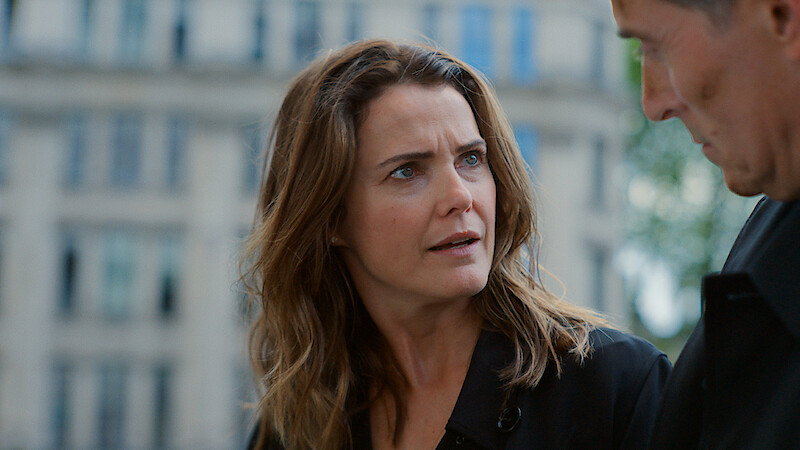
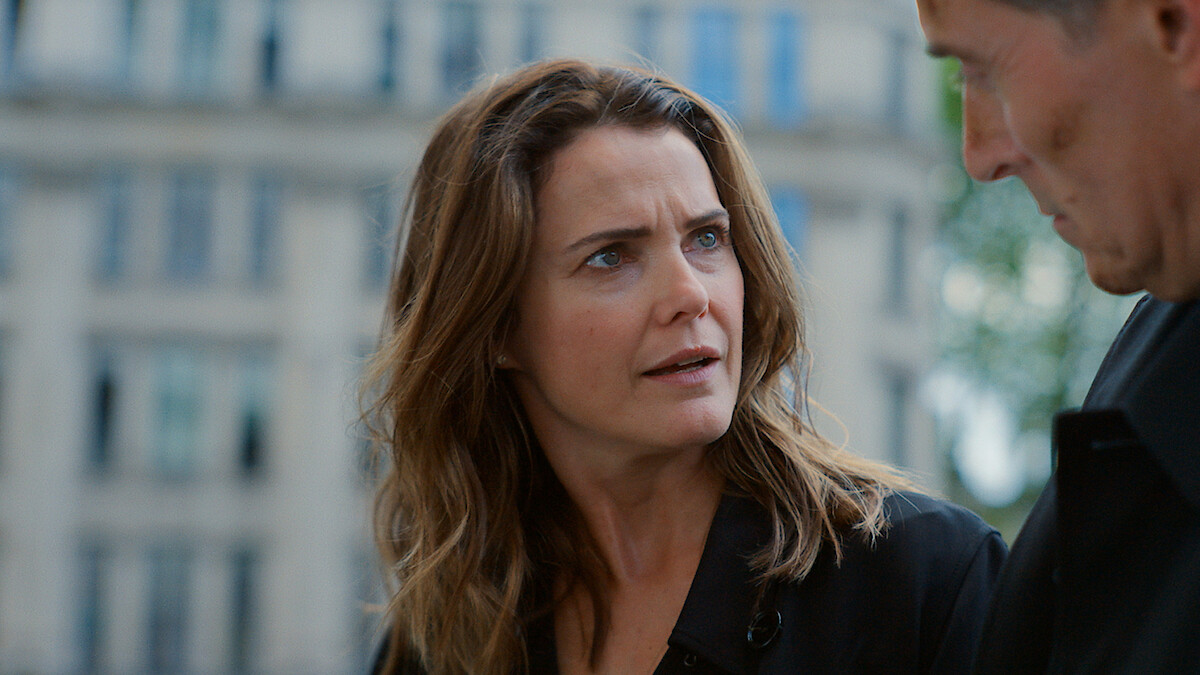
“Unfortunately, I’ve got ‘resting antagonist face,’ ” says actor Rufus Sewell as he reflects on the closing frames of The Diplomat Season 3. His character, Vice President Hal Wyler, is posing for photos with President Grace Penn (Allison Janney) and British government officials. His wife and US ambassador to the UK, Kate Wyler (Keri Russell), looks on as a realization crystallizes in her mind: Her husband likely double-crossed her and worked with the president to commit what could be seen as an act of war against the United Kingdom. She, and the audience, can see it in Hal’s expression. Resting antagonist face is apropos.
Sewell has played a long list of morally dubious characters: the arrogant jouster Count Adhemar of Anjou in A Knight’s Tale, the scandal-mired Prince Andrew in Scoop, and the manipulative ex-boyfriend Jasper in The Holiday. Hal offers the actor, who is Emmy-nominated for Outstanding Lead Actor in a Drama Series for his performance this season, an opportunity to build a more complex character alongside showrunner Debora Cahn. “I love the idea of being in that crux between the wrong and the right because it’s brilliant stuff to get to play,” he says. As Vice President, Hal has achieved a new degree of power and influence — perhaps at the cost of his principles. “Is this going to be the story of someone who becomes untethered from what they believe they were? Because being an angel outside with your voice muffled is no use.”
Season 3 pushes the relationship between Hal and Kate (and the US and the UK) into new, murkier waters, as Hal steps out of his spouse’s shadow. Here, Sewell shares his reflections on the season and what excites him about Hal’s new journey in the upcoming fourth season.
When you got the script for Season 3, what was it like realizing that Hal was going to become vice president?
Rufus Sewell: I was delighted. Not because I want him to ascend in any particular way — there’s a danger to that. You don’t want to be the dog that caught the car, [and] you don’t want to be playing characters that win all the time. It’s all about the opposite of what you expect.
When [Hal’s promotion] was hinted at towards the end of Season 2, my first concern obviously was, “Oh my God, I’m not going to win. Am I?” I don’t want to be stuck with power. It’s much more interesting to be a bit more scrappy and need something.
When the idea came up that something would happen that was not part of the plan, [it] completely turned upside down the dynamic, the power dynamic between Hal and Kate — that was really fantastic. He truly believed that this was a great opportunity for her. However, when the door opens for him instead by surprise, is he going to walk through it? Absolutely.
In the Season 3 finale, Hal works with Grace behind Kate’s back. What did you make of that betrayal?
Sewell: I only really found out about the aspect of it as we came to it in the show. It’s not some long-term plan, but it’s a real-life, realpolitik reaction to a very, very dangerous situation. I’m quite happy to accept that Hal has his reasons for doing what he does and could argue them very, very, very strongly.
[But] the real question is how much of a betrayal is that? You could argue that he quite rightly intuited that it was too dangerous to tell her, putting her in a bad position. It’s a very good ending to the show and I understand it completely because it sets it up — if we were to continue the show as we do, then you will see a different perspective.
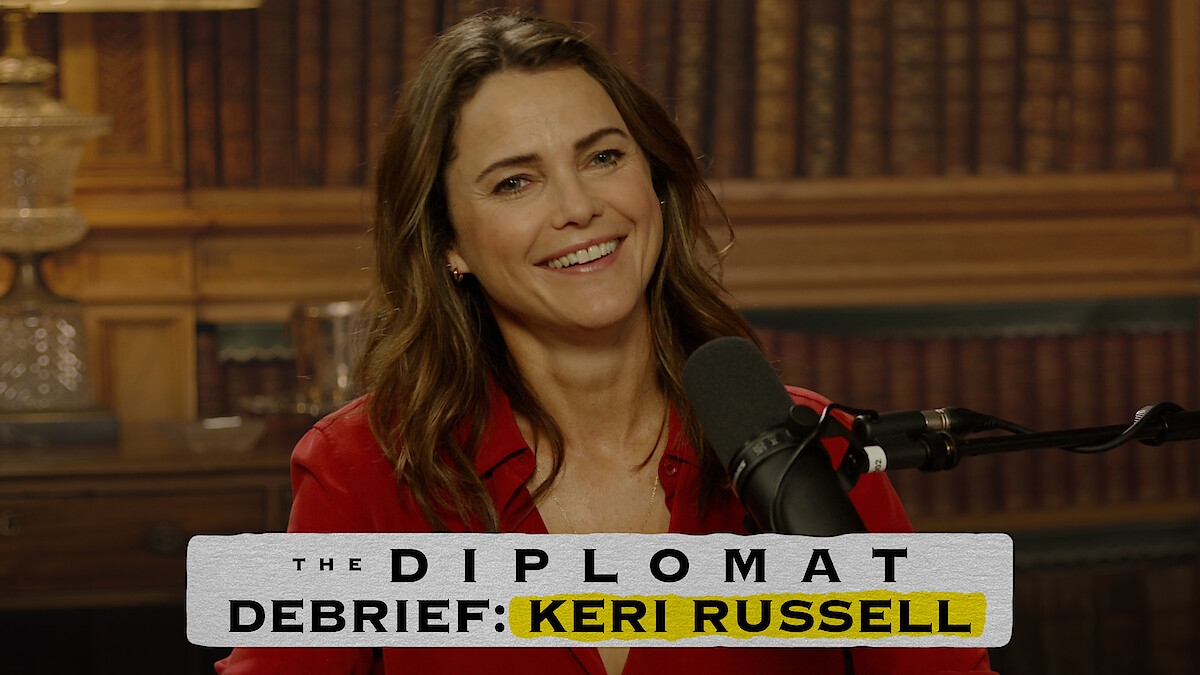
What’s it been like building this push-and-pull dynamic with Keri Russell this season?
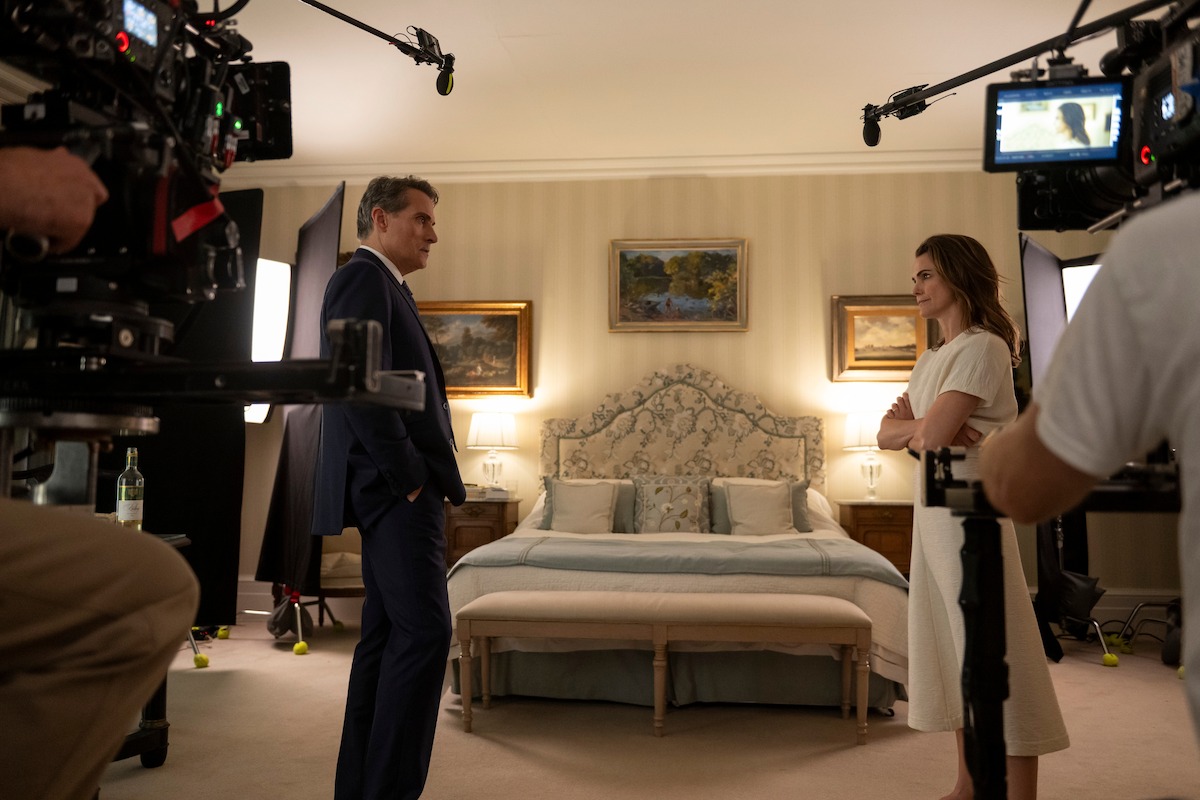
Sewell: I think Keri usually says the same thing: It’s there in the writing. I love to be surprised and shocked and taken unawares by the changes in the script. We completely trust Debora and the team.
[And] right from the start, I felt I had a take on the character, or rather just the language. I don’t even worry about how she’ll do it, I just try to work out what I mean, what I want, and then I go prepared to just play around. She’s the same and we have tremendous fun. I just feel like it’s there waiting on the page.
Debora Cahn’s scripts hold this political thriller and marital comedy in the same scene. What’s it like playing both at once?
Sewell: For me, it’s my favorite type of tone — it’s the idea that sadness and humor and all of these things exist at the same time in people. [And in reality], people laugh a lot more [than characters do in drama]. When people are doing drama, they often don’t laugh as much as people do in real life.
Anyone who’s ever spent time in a hospital waiting room [knows] tragedy and comedy live together. It’s their language. I don’t think of it as a tone to play, like a style, but just trying to think of it as reality.
Every Diplomat fan loved the “Amagansett” episode. What was your memory of shooting it?
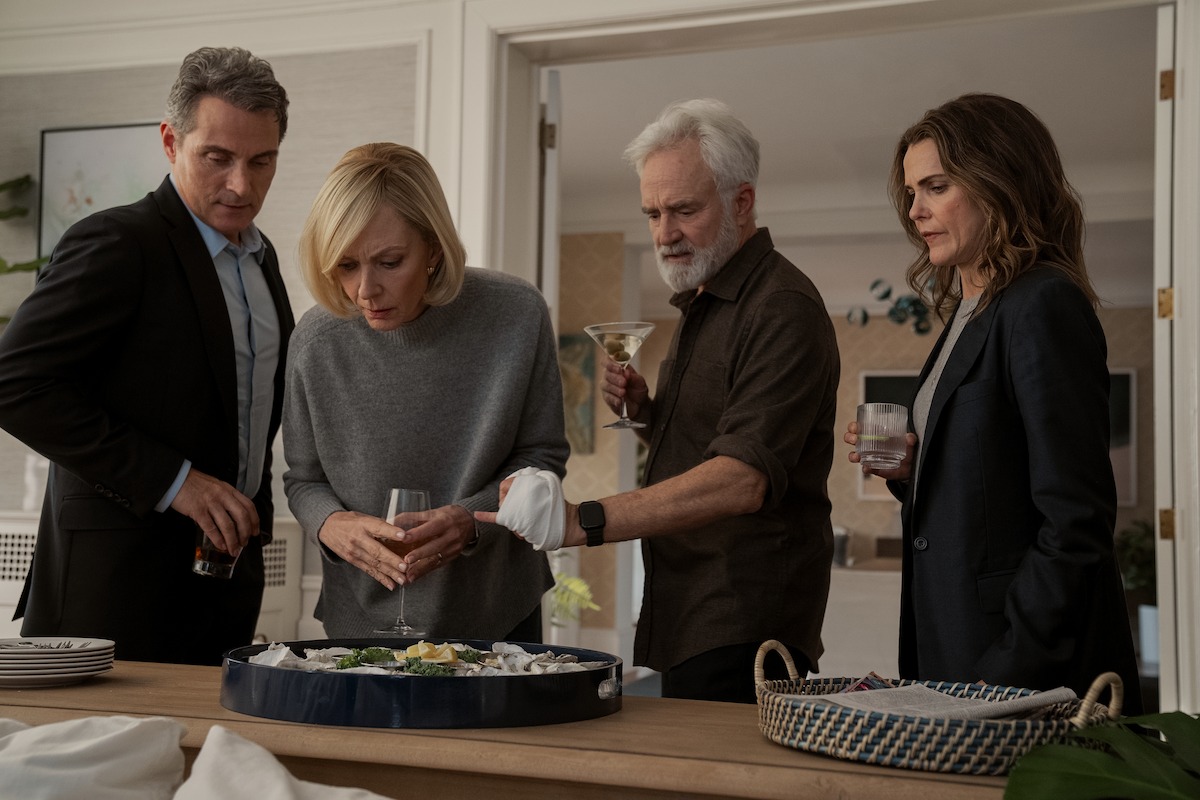
Sewell: We were all very excited when we got this episode. We were given this small play, this 1970s-style relationship comedy-drama to do within the episode. The writing is so deft and brilliant that the comedy is completely tied to the drama of it. It isn’t funny unless it’s not funny, you know what I mean?
Everyone had studiously nailed their lines so that we could basically just see what happened — everyone is very good at keeping it open, so that you are listening to the other people and responding to what they’re doing. And it was just tremendous fun. But you also did not want to be the one that screwed it up — the pressure began to mount. It would be really bad if I was the one to screw this up.
Without spoiling anything, what part of Hal were you most curious to explore in Season 4?
Sewell: Especially [after] the end of Season 3, [where] some people could understand [Hal], other people were making proclamations about what kind of character he was, which I find faintly tiresome, but I get it, because he’s a very complex character. This isn’t a bad guy origin story.
I’m very interested in protecting the truth as I see it in any given moment of Hal’s intentions and his desires, but fully cognizant of the fact that’s what people who go wrong also do. Your good intentions and your idea of yourself can be used to trick yourself into doing what the basest part of you wants, [and] you do the thing that the basic part of you wants and you post-rationalize. I’m just [against] prejudging and making things black and white.